Architecture by Frederick Tang Architecture
Photography by Jordan Walters
Brooklyn, NY
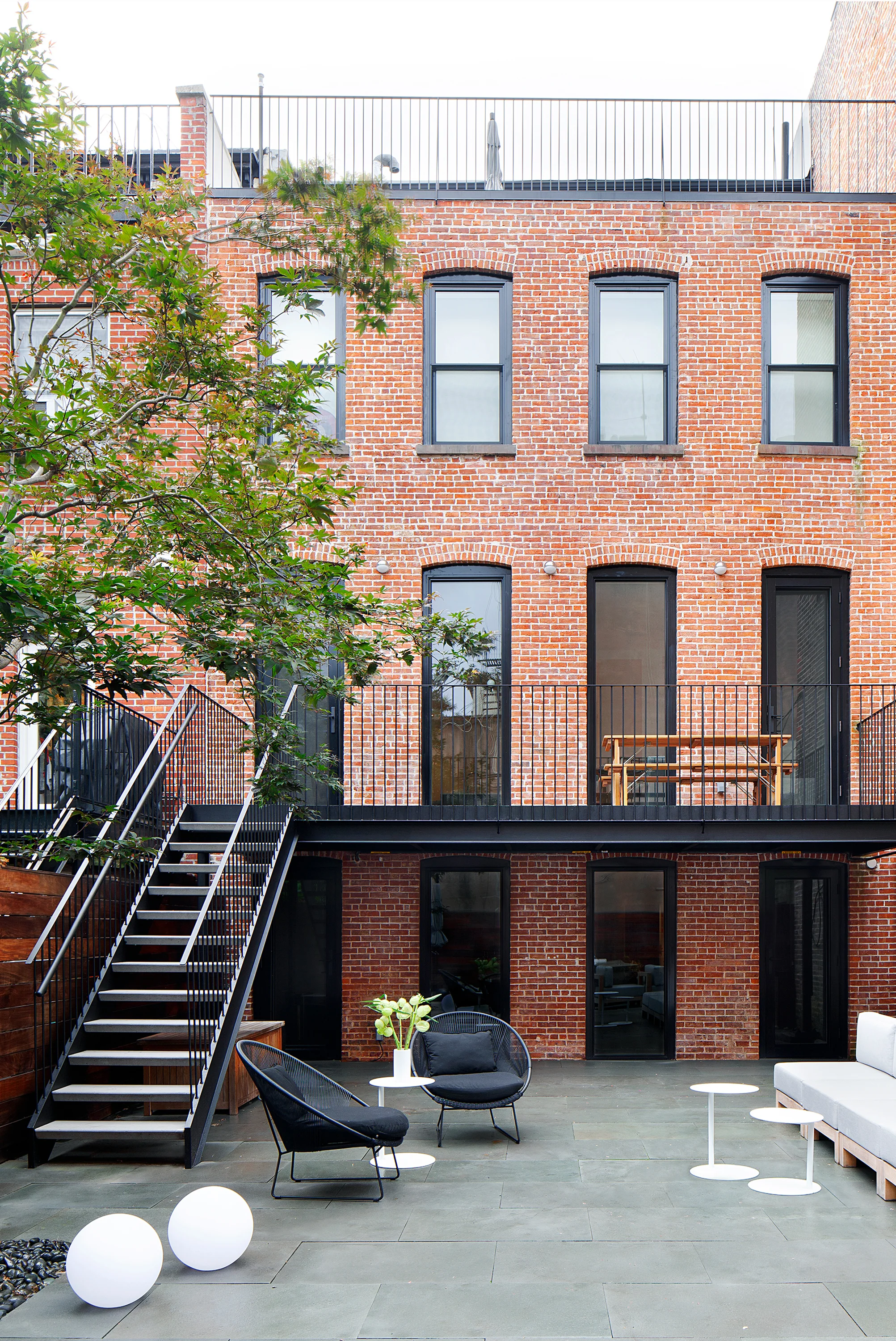
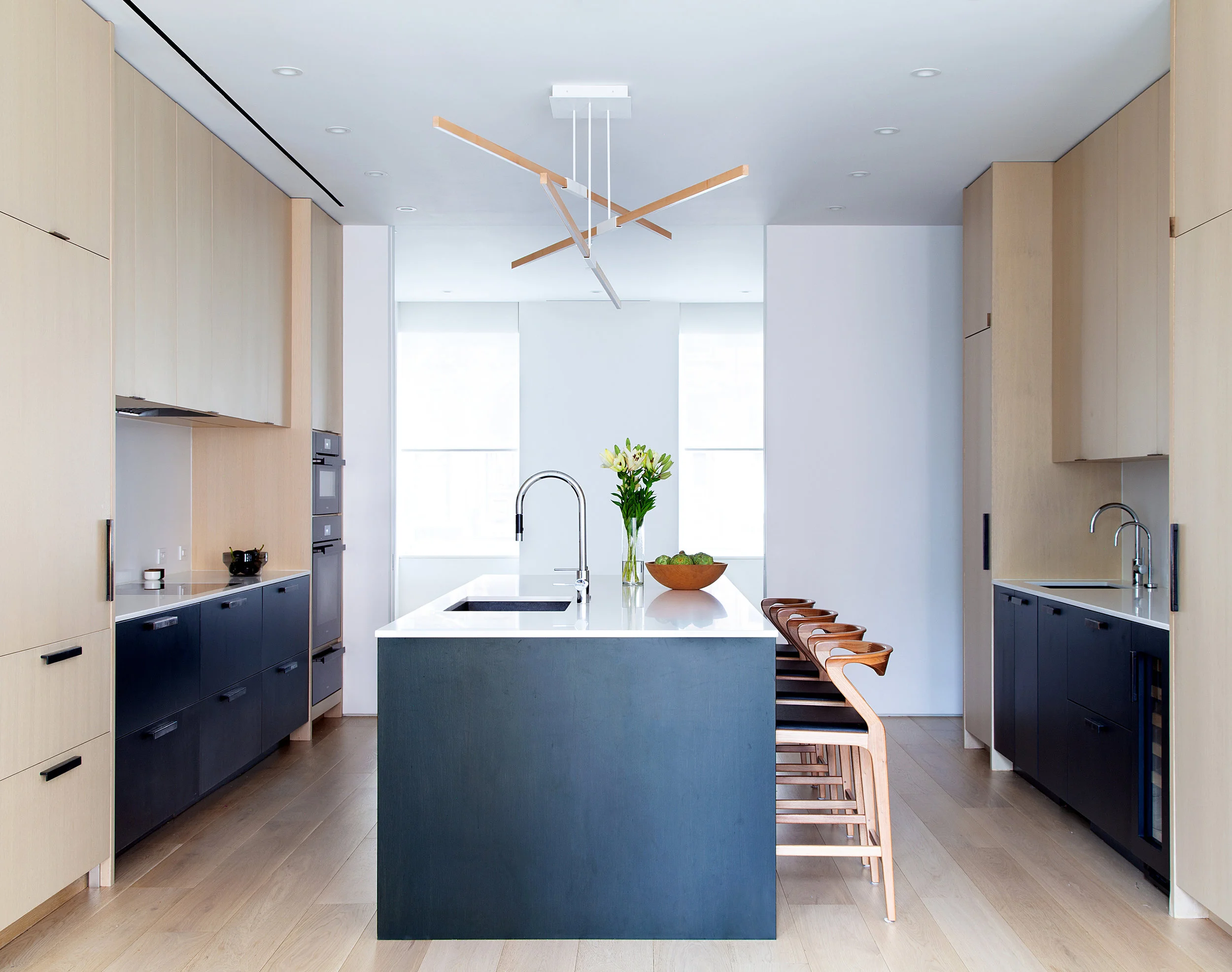
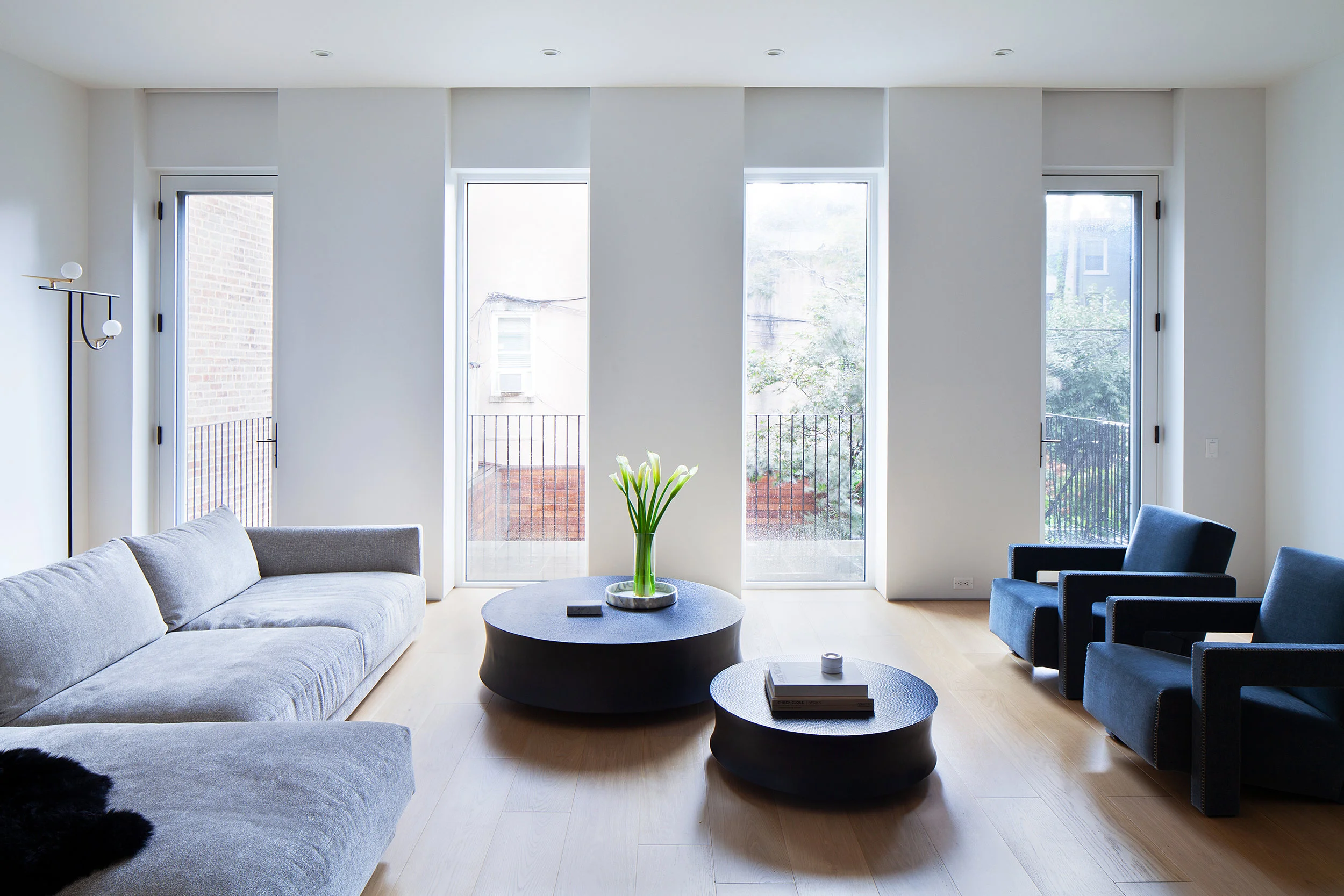
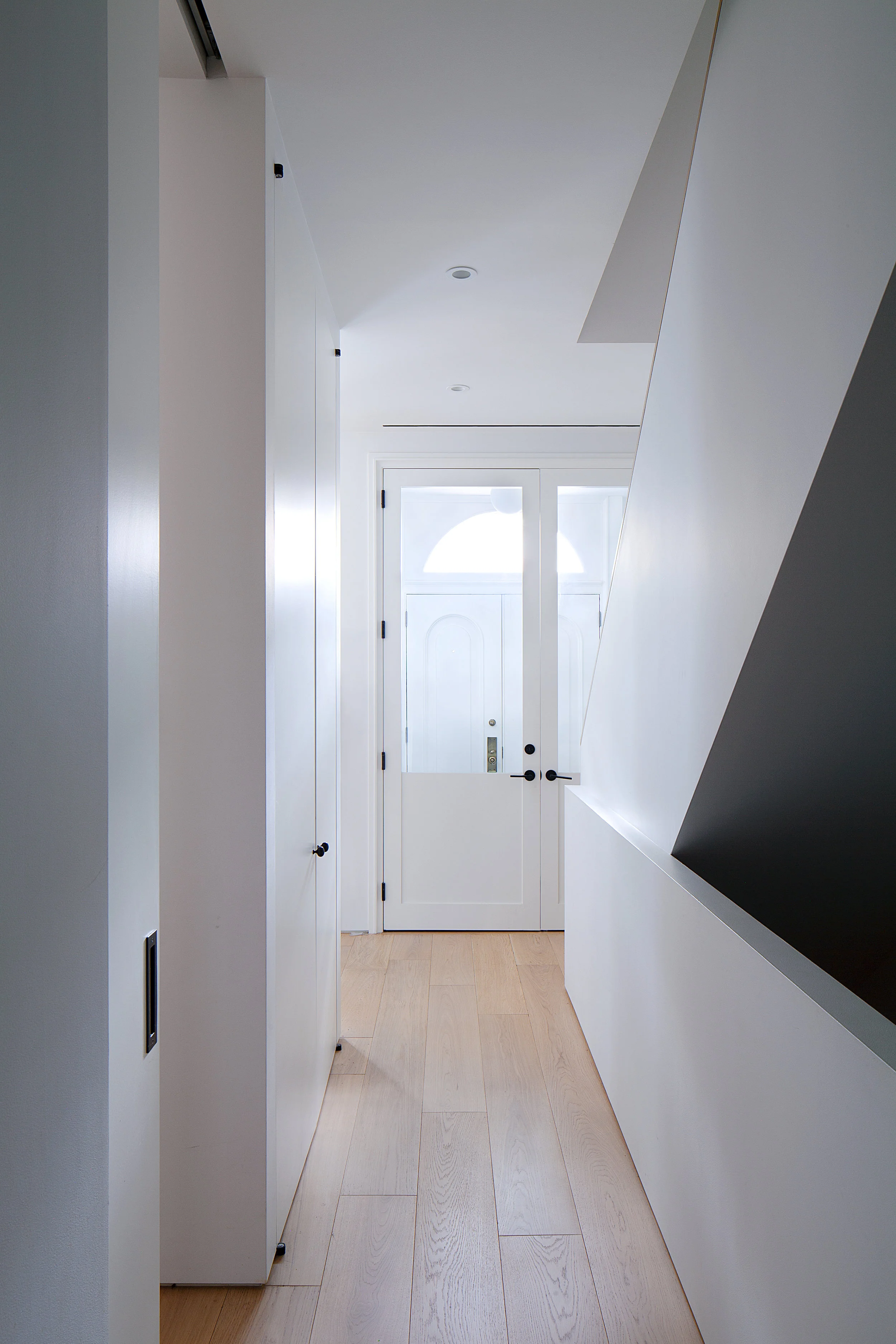
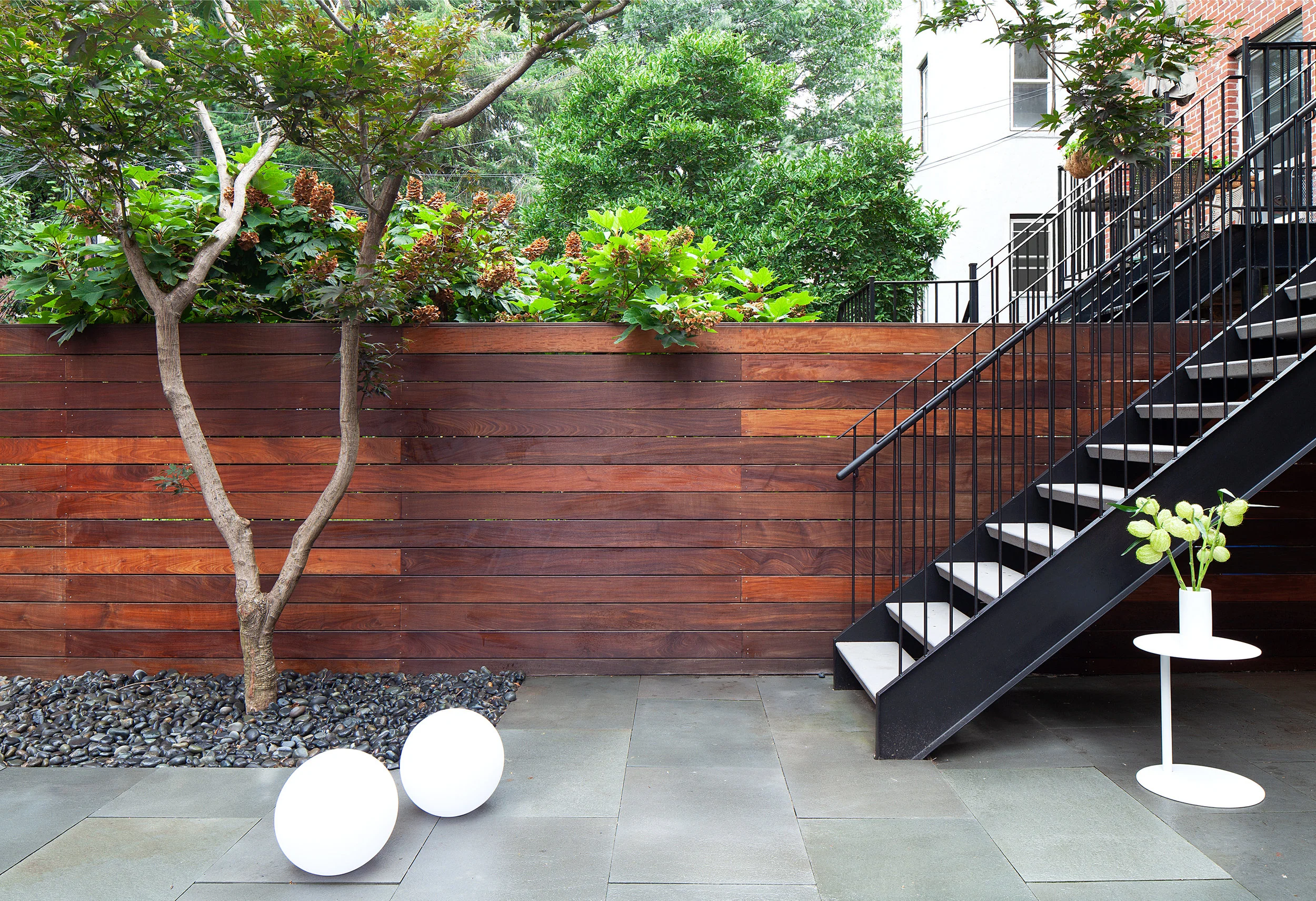
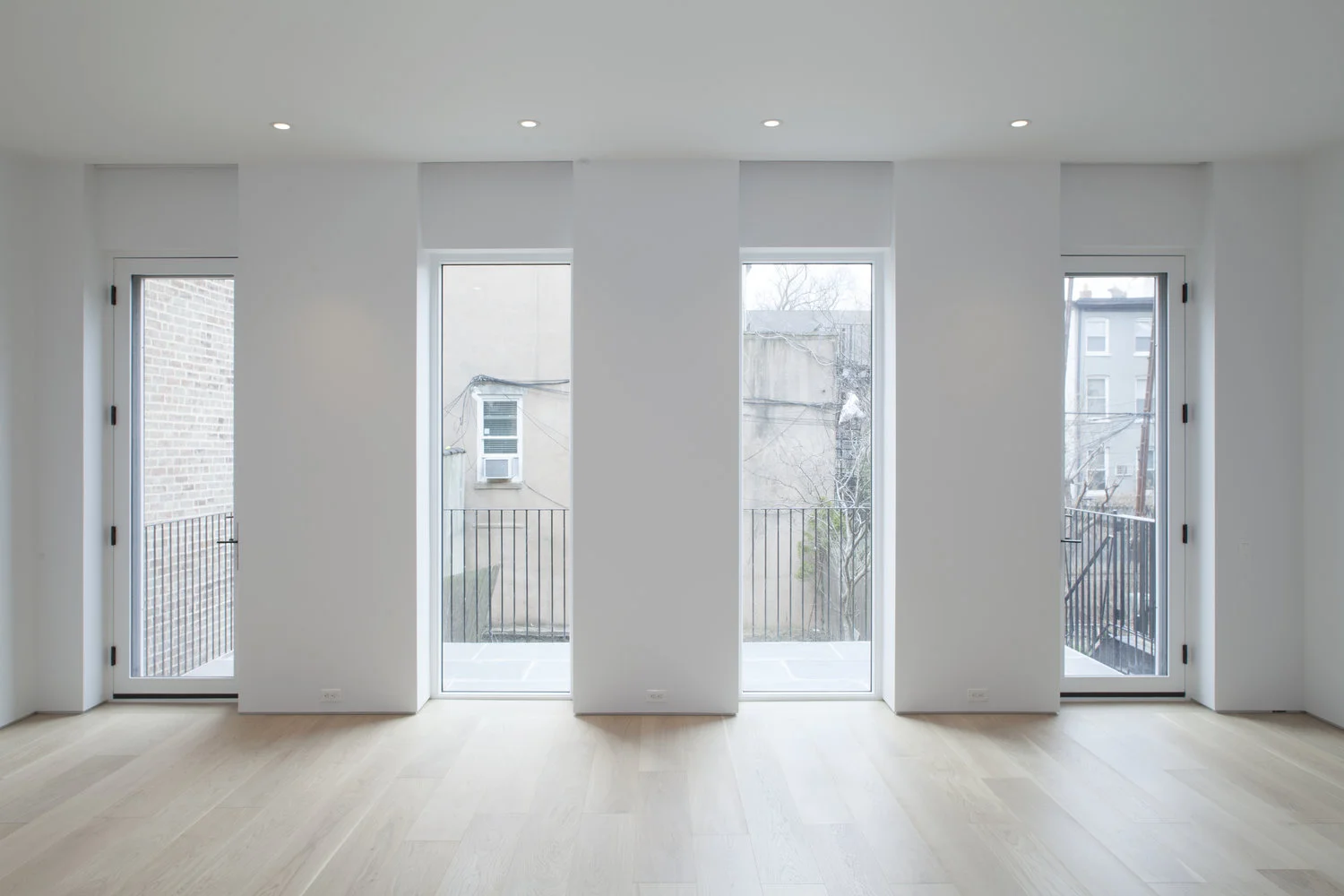
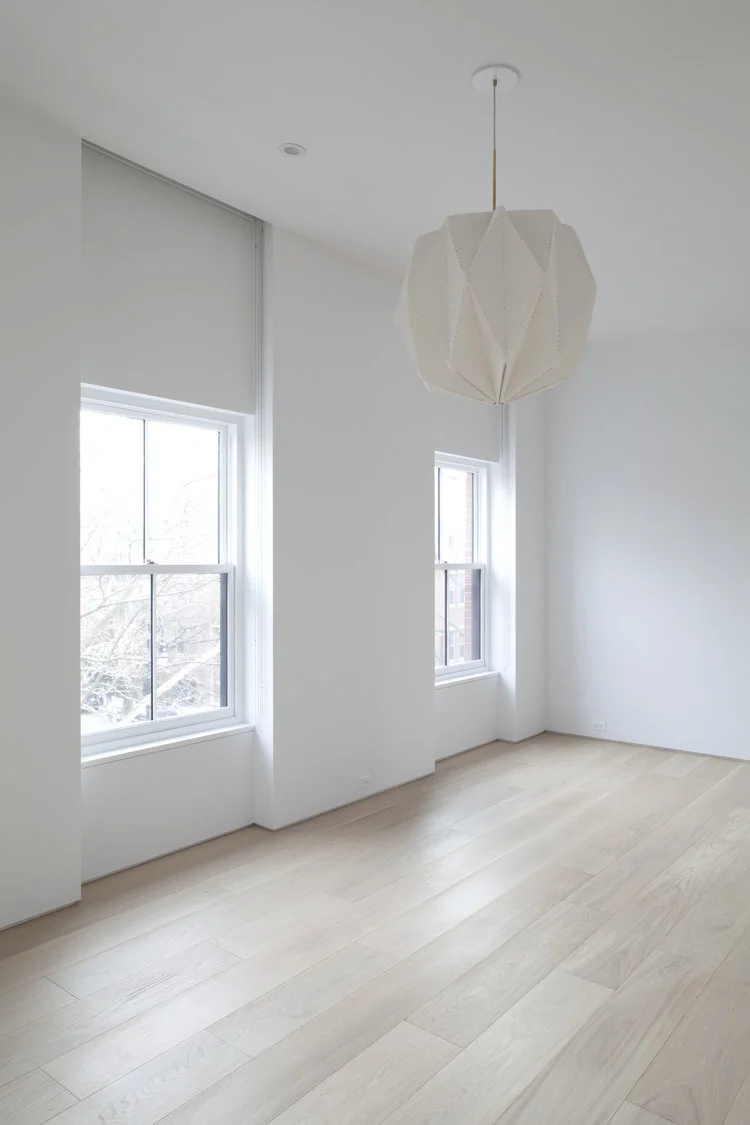
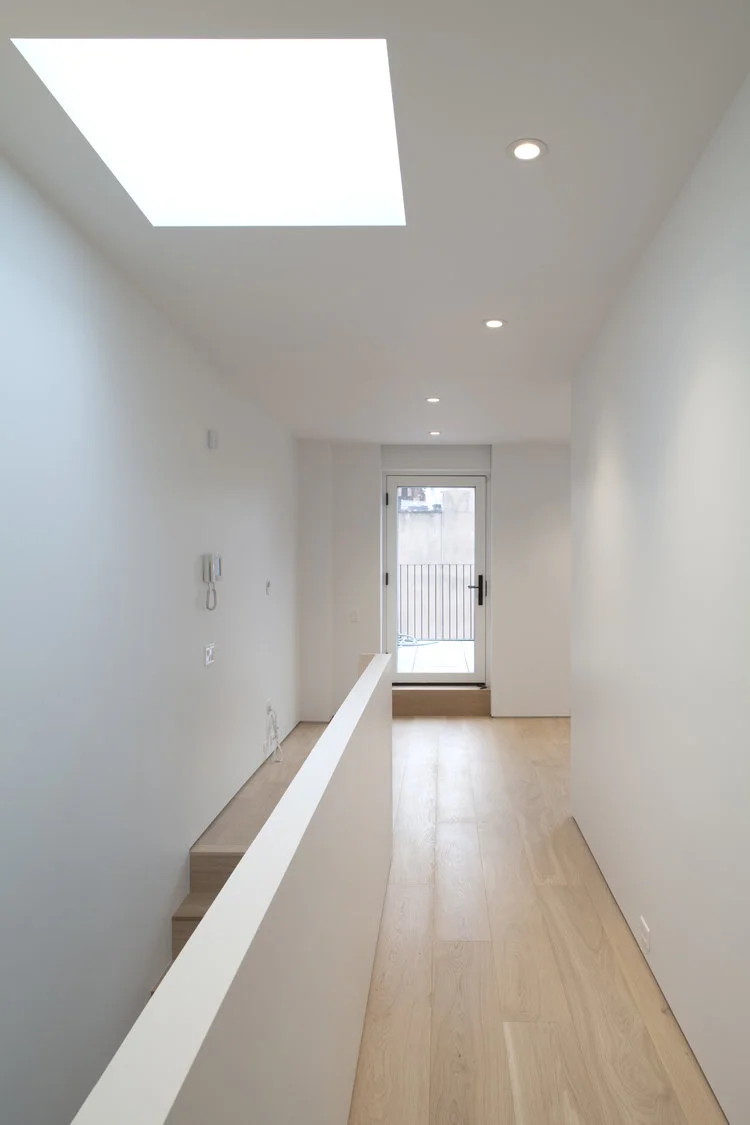
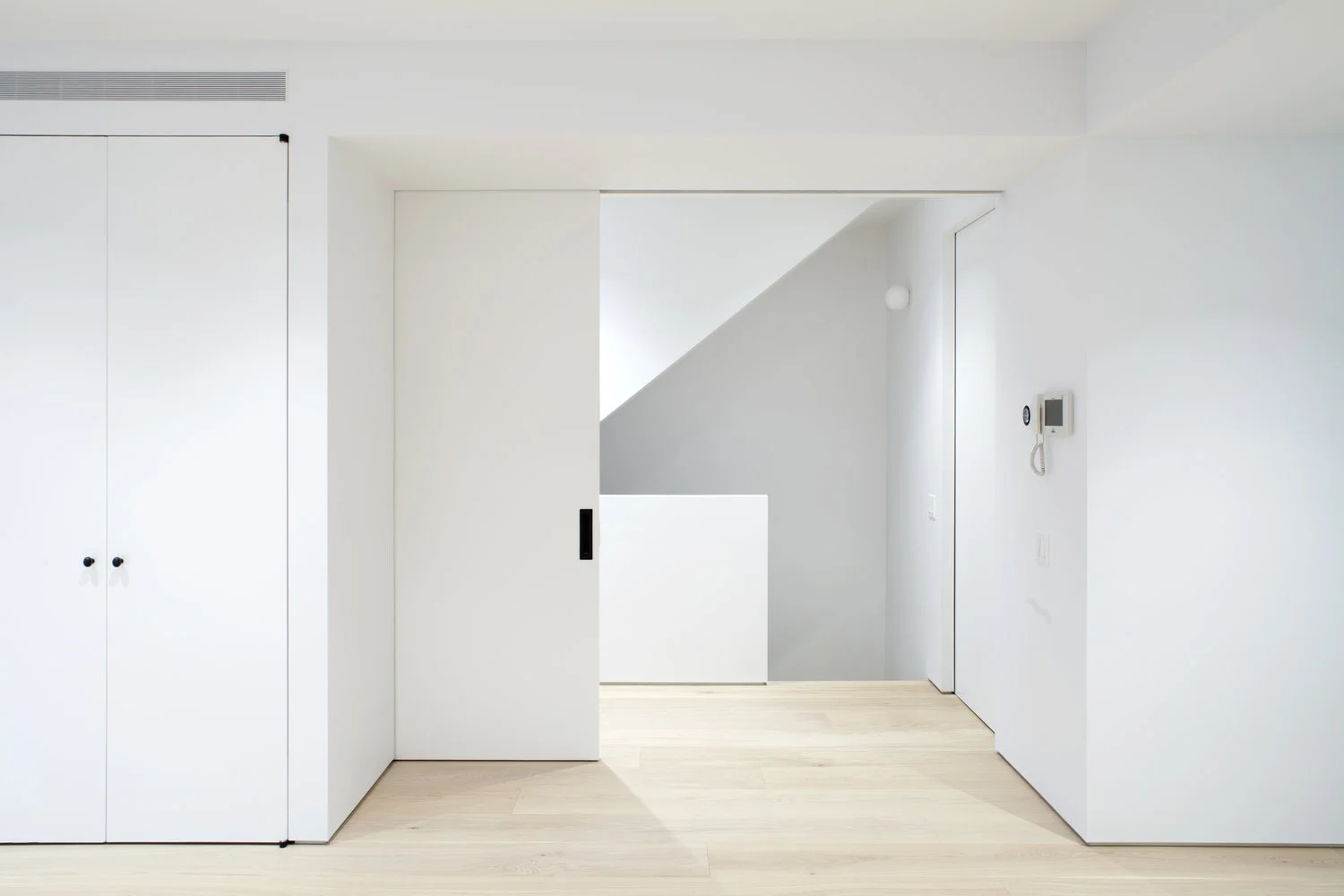
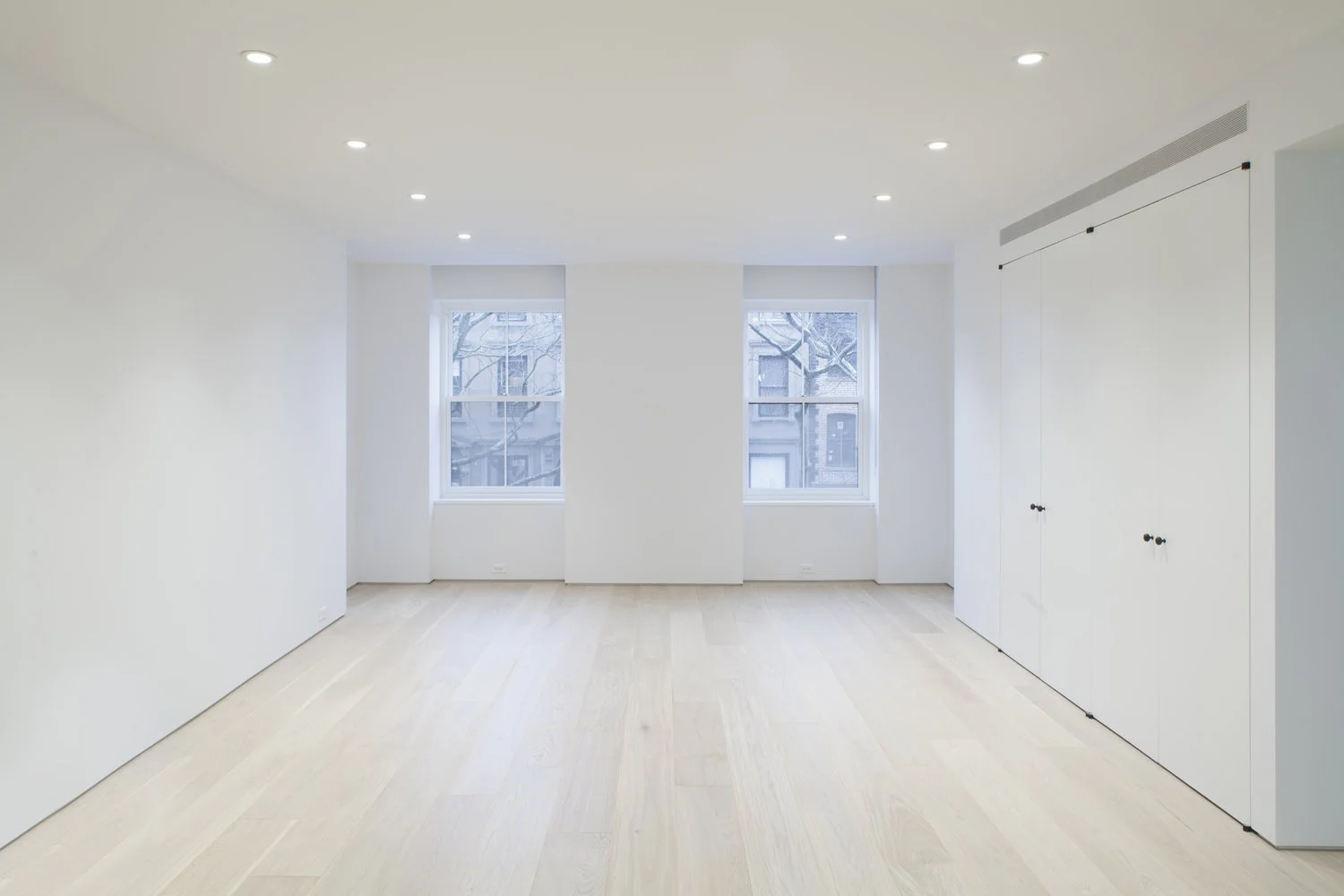
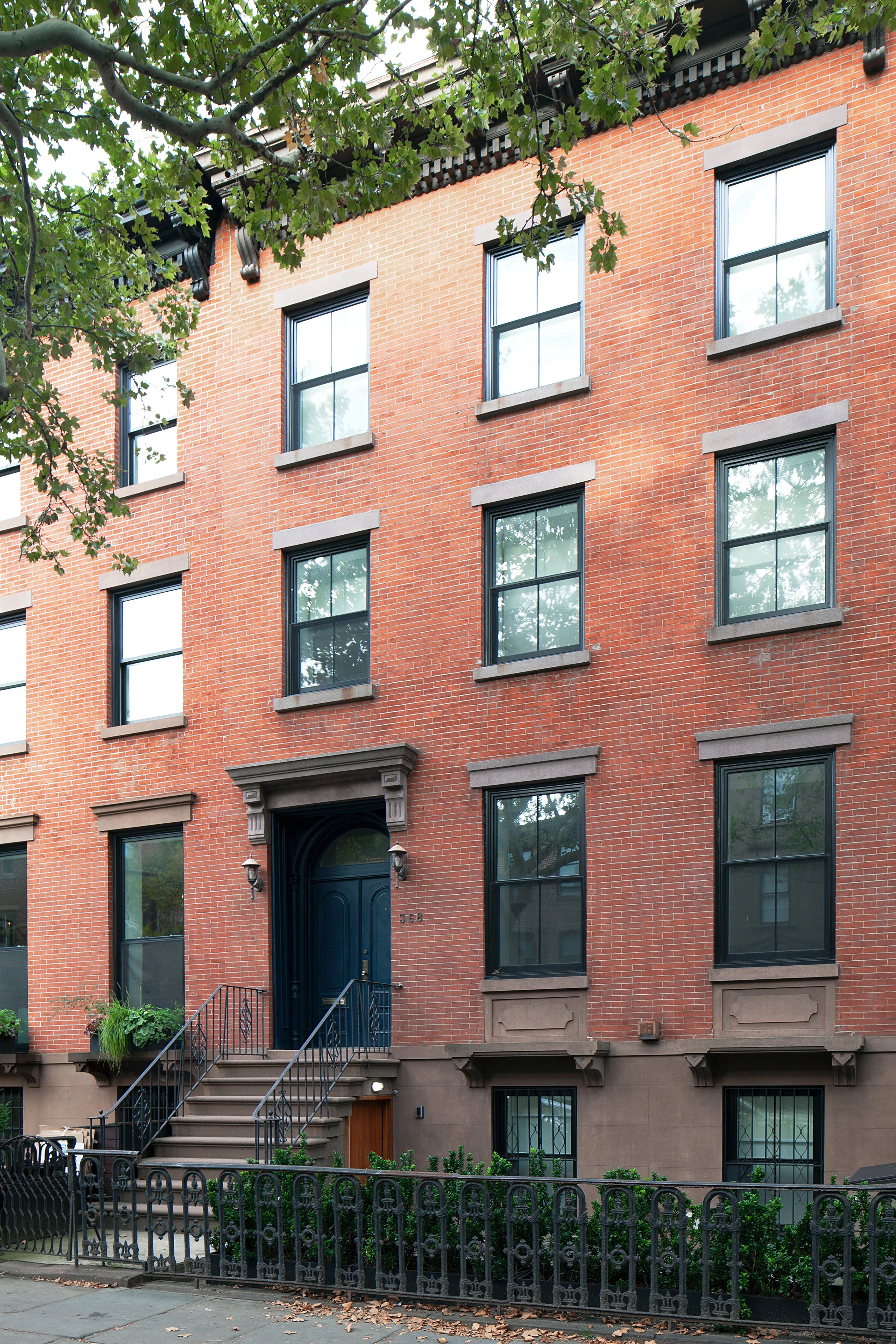
Frederick Tang’s dualistic (both minimalist and preservational) renovation capitalizes on two distinct components. The 1843 townhouse is extraordinary wide, and while the exterior had stayed in tact, the interior over time had been stripped from its original condition. At 25’ wide the home allows for a cellular configuration where kitchen en living can be disconnected, while still having a spacious living room with four tall windows overlooking a newly landscaped garden. The interior having lost most of its original detail (a fact that was used as an opportunity) was stripped of the remaining ornament to create a minimalist aesthetic. The combination of clean walls and frameless doors start to blur the distinction between the two. With their large size, the doors start to operate like movable walls, allowing the space to become private rooms of loft like spaces, depending on the doors position.
This architecture project reads as a study in control: openings are disciplined, surfaces are restrained, and the sequence from room to room is carried by proportion rather than decoration. Doors and thresholds feel intentionally framed, and the transitions between circulation and dwelling zones are legible without becoming theatrical.
Daylight is treated as a material in its own right. Window placement and mullion geometry distribute light in a way that clarifies depth, edge conditions, and the thickness of wall planes. Brightness is allowed to shift through the day, so the interior can move from crisp definition to softer tonal continuity.
Material choices appear calibrated for longevity. Timber surfaces provide warmth and grain movement, while stone and painted elements stabilize the composition. Metal accents are used sparingly, likely as hinges, pulls, and trim notes, creating contrast at touch points rather than overwhelming the rooms with reflectivity.
What stands out is the consistency of detail language: joinery lines remain clean, panel rhythms are steady, and larger gestures are supported by quiet precision in corners, reveals, and interfaces. Where pattern is visible in the flooring, the layout reinforces directional flow and anchors furniture placement without competing for attention.