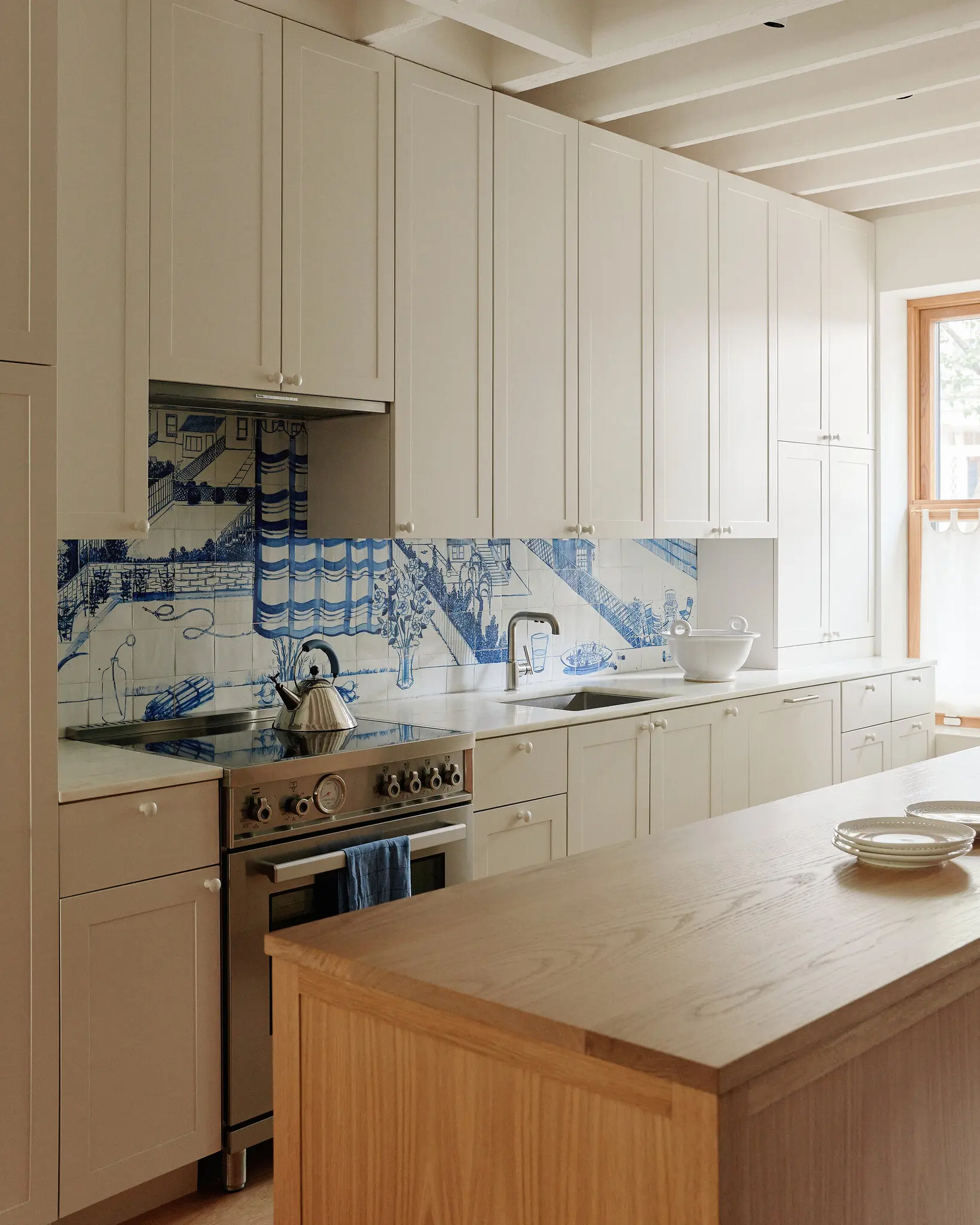
Location: Brooklyn, New York
If you ask, "What does it cost to renovate a Brooklyn brownstone?", the honest first answer is: what kind of renovation are we talking about?
A cabinet swap, a systems-heavy reconfiguration, a full gut, and a full gut with rear extension are not budget variations on one job. They are different jobs with different risk profiles.
This guide is a planning overview for March 2026. It is meant to help owners understand where brownstone renovation budgets usually go, what cost ranges are realistic at a high level, and which parts of the project tend to make the number jump.
The short version: most owners should think in budget bands, not one magic number
For Brooklyn brownstones, the useful question is usually not "What is the exact cost per square foot?" It is "Which budget band does my scope actually belong in?"
Recent late-2025 and 2026 local contractor guides suggest that a true brownstone gut renovation in New York often lands somewhere around the mid-to-high six figures and can move well into seven figures once scope, systems, facade work, or additions get serious. A recent Metro Contractors guide puts many 3-to-4 story brownstone gut projects around `$450 to $750 per square foot`, with many landing roughly in the `$650,000 to $1.4 million+` range. A current Arber Construction Brooklyn pricing guide places full brownstone and townhouse gut work around `$400 to $800+ per square foot`, with prime Brooklyn neighborhoods trending higher.
That does not mean your house automatically fits those numbers. It means a real brownstone renovation budget is usually shaped by scope first, not optimism.
A practical way to think about brownstone cost
In owner terms, there are usually four broad buckets:
1. Cosmetic refresh
This is paint, floor refinishing, selective fixture replacement, some cabinetry, and light finish work.
New York City's DOB says some work such as painting, plastering, installing new cabinets, plumbing fixture replacement, floor resurfacing, and non-structural roof repair may not require a permit, depending on the scope. That matters because once you move beyond light finish work, the consultant, permit, and schedule structure changes fast.
Cosmetic work can still get expensive in a townhouse, but it is not the same budget category as moving walls, replacing systems, or rebuilding the rear of the house.
2. Interior renovation with selective layout changes
This is where many owners underestimate cost. The job may still "feel" like an interior refresh, but once you move plumbing, rework electrical, touch structure, add HVAC, or build custom kitchens and baths, the project starts behaving more like a permit-driven renovation than a decorating exercise.
DOB's kitchen and bathroom guidance notes that many projects with rerouted gas, new bathrooms, added outlets, or load-bearing changes require plans and permits, often through an ALT-2 filing. That is the threshold where soft costs and coordination start to matter much more.
3. Full gut renovation
This is the big one: major demolition, new mechanical, electrical, and plumbing systems, insulation or envelope upgrades, structural repair, significant layout rework, and new finish packages throughout.
This is where per-square-foot pricing becomes more relevant, but even here the range can widen fast depending on:
- landmark constraints
- facade or roof work
- cellar lowering or waterproofing
- rear additions
- custom millwork and stone
- utility upgrades
- access and logistics on a narrow Brooklyn block
4. Full gut plus expansion
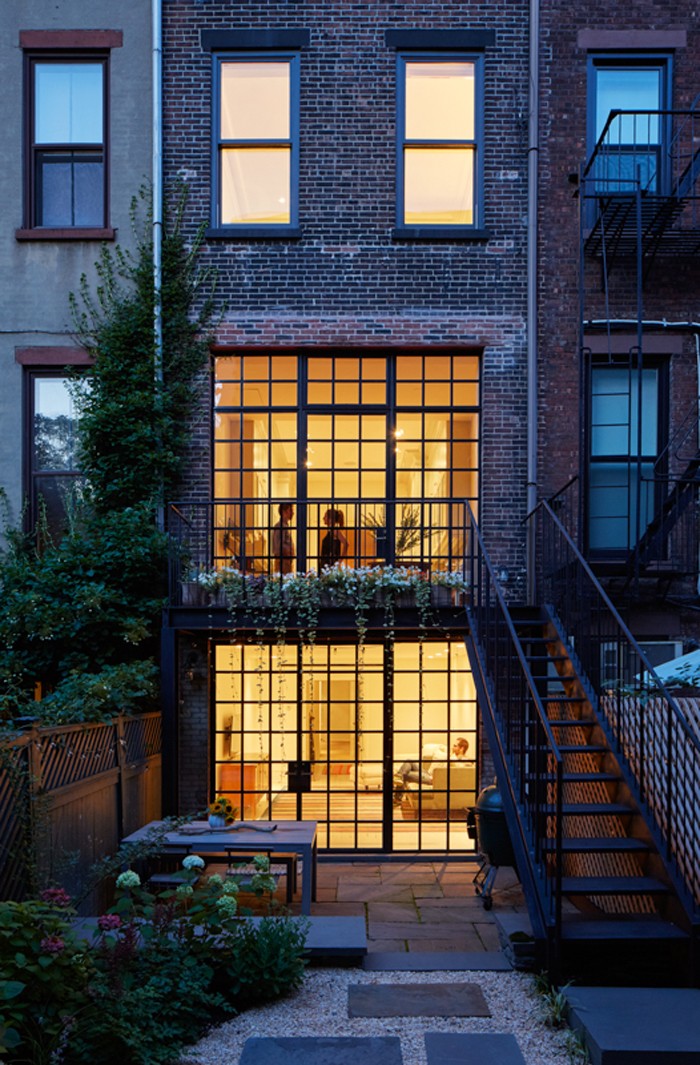
Once you add a rear extension, dig-out, rooftop work, or major facade scope, you are no longer talking about "the same renovation, just a little bigger." Foundation work, structural steel, waterproofing, stairs, windows, roofing, drainage, and approvals can change the whole budget logic.
Arber's current Brooklyn guide places rear extensions around `$300,000 to $700,000+` as a broad planning range. That is a market reference, not a rule, but it is directionally useful: the envelope and structure can become the project.
What owners usually miss in the first budget conversation
The biggest mistake is focusing only on construction line items.
A brownstone renovation budget usually includes at least four layers:
1. hard construction costs
2. soft costs
3. contingency
4. owner-side decisions that expand the job after pricing begins
Metro's 2026 brownstone guide suggests adding roughly `15 to 25 percent` for soft costs and `10 to 15 percent` for contingency in century-old buildings with hidden conditions. I would treat that as a planning benchmark, not a universal formula, but the logic is right.
Soft costs can include:
- architect fees
- structural engineering
- expediting
- filing fees
- surveys
- landmark consulting if needed
- energy code or specialty consultants
- insurance and testing
And then there are the old-house issues that are not optional once discovered.
The NYC DEP states that owners are responsible for having an asbestos survey performed before work that may disturb asbestos-containing materials, and if asbestos is found and will be disturbed, licensed abatement and air monitoring requirements apply. In prewar townhouses, that is exactly the kind of hidden-condition cost owners forget to budget until the project is already underway.
Why brownstones cost more than many apartment renovations
There are a few recurring reasons:
The whole building is your problem
You are not just renovating one floor plate inside a managed building. You may be responsible for roof, facade, stoop, drains, cellar moisture, joists, service upgrades, exterior walls, and stairs.
The systems are often old and layered
Aging plumbing, old electrical, patchwork heating systems, and prior-owner interventions tend to make pricing less clean.
Havard Cooper's current NYC brownstone guide notes that full MEP overhauls can account for roughly `25 to 35 percent` of a total renovation budget. That figure will vary by project, but the broader point is right: systems are often a major budget driver, not a background item.
Approvals and envelope work change the job
LPC does not always make a project dramatically more expensive by fee alone, but it can change design, materials, shop drawing requirements, review time, and sequencing. LPC's official fee page states there is no fee for a Permit for Minor Work, but alterations that also require DOB permits carry LPC fees tied to project cost. The fee itself is usually not the main problem. The cost consequence is everything that comes with permitted and reviewed work.
Narrow-lot logistics are real
Multi-story staging, shared-wall conditions, stoop access, scaffold needs, facade protection, and material handling on tight Brooklyn streets all affect labor and schedule.
What changes the budget the most
If you want a faster early budget test, these are usually the biggest levers:
- Are you keeping the layout mostly intact, or moving kitchens, baths, and stairs?
- Are you replacing all systems, or only selected components?
- Is the facade, roof, or stoop part of the job?
- Are you landmarked?
- Are you extending into the rear yard or lowering the cellar?
- Are you choosing standard finish packages, or highly custom millwork, appliances, stone, and metalwork?
- Does the house need structural repair before design ambition even starts?
This is why owners can get two radically different budget opinions for what sounds like "a townhouse renovation." One person means paint, kitchen, baths, and light carpentry. Another means new structure, new systems, new rear wall, and a dig-out.
What to do before asking for a precise number
Before you lock emotionally into a budget, get clear on:
- whether the scope is cosmetic, partial, gut, or gut-plus-expansion
- whether facade or landmark work is included
- whether the house likely needs full MEP replacement
- whether the cellar, roof, or rear wall are part of the job
- what level of finish you are actually expecting
- how much contingency you are willing to carry
If you skip that step, early estimates are often just mood boards with numbers attached.
A better framing question
Instead of asking, "What will my renovation cost?", ask:
1. What scope category am I really in?
2. What are the biggest cost drivers in this house?
3. Which parts of the project are optional, and which are likely unavoidable?
4. What budget should I assume before design and permit realities sharpen the number?
That is how you avoid wasting months designing a seven-figure project on a six-figure budget.
Official and market references worth reviewing
- NYC DOB: Does my project require a permit?
- NYC DOB: Renovating Kitchens & Bathrooms
- NYC DEP: Asbestos Abatement
- NYC LPC: Fees
- Metro Contractors: Brooklyn, Harlem, & Bronx Brownstone Renovation Costs 2026
- Arber Construction: Brooklyn Renovation Costs 2025
- Havard Cooper: The Complete NYC Brownstone Renovation Guide
Next step if you are early in planning
The useful first move is usually not getting a hyper-specific quote. It is deciding which scope bucket your project actually belongs in, then pressure-testing the likely cost drivers before drawings, approvals, and finish selections make the budget harder to unwind.
If you want help sorting the low-friction scope from the high-cost scope before the project gets expensive, start with the Work With Me page.