architecture by: Proctor & Shaw
structural engineer: Constant Structural Design Ltd
photography by: Ståle Eriksen
via: Dezeen, Proctor & Shaw
Clapham, London
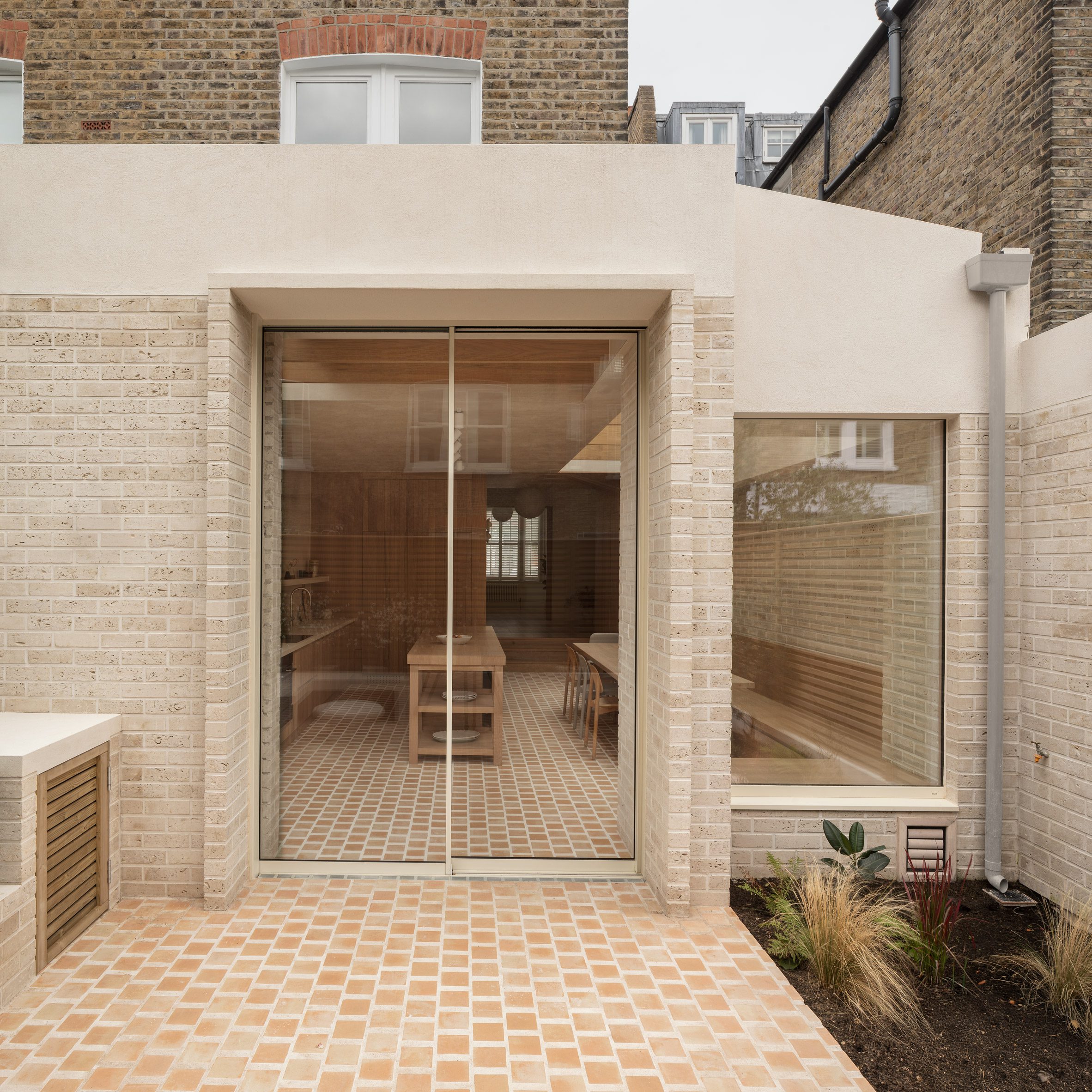
Stone Brick House is a good example of how an extension can feel calm without turning neutral or blank. Proctor & Shaw rebuilt the rear of a terraced house in Clapham for a young family, using pale limestone brick as the main architectural material rather than as an accent. The result is unusually solid for a kitchen addition: the brick reads as enclosure, finish, and environmental strategy at once.
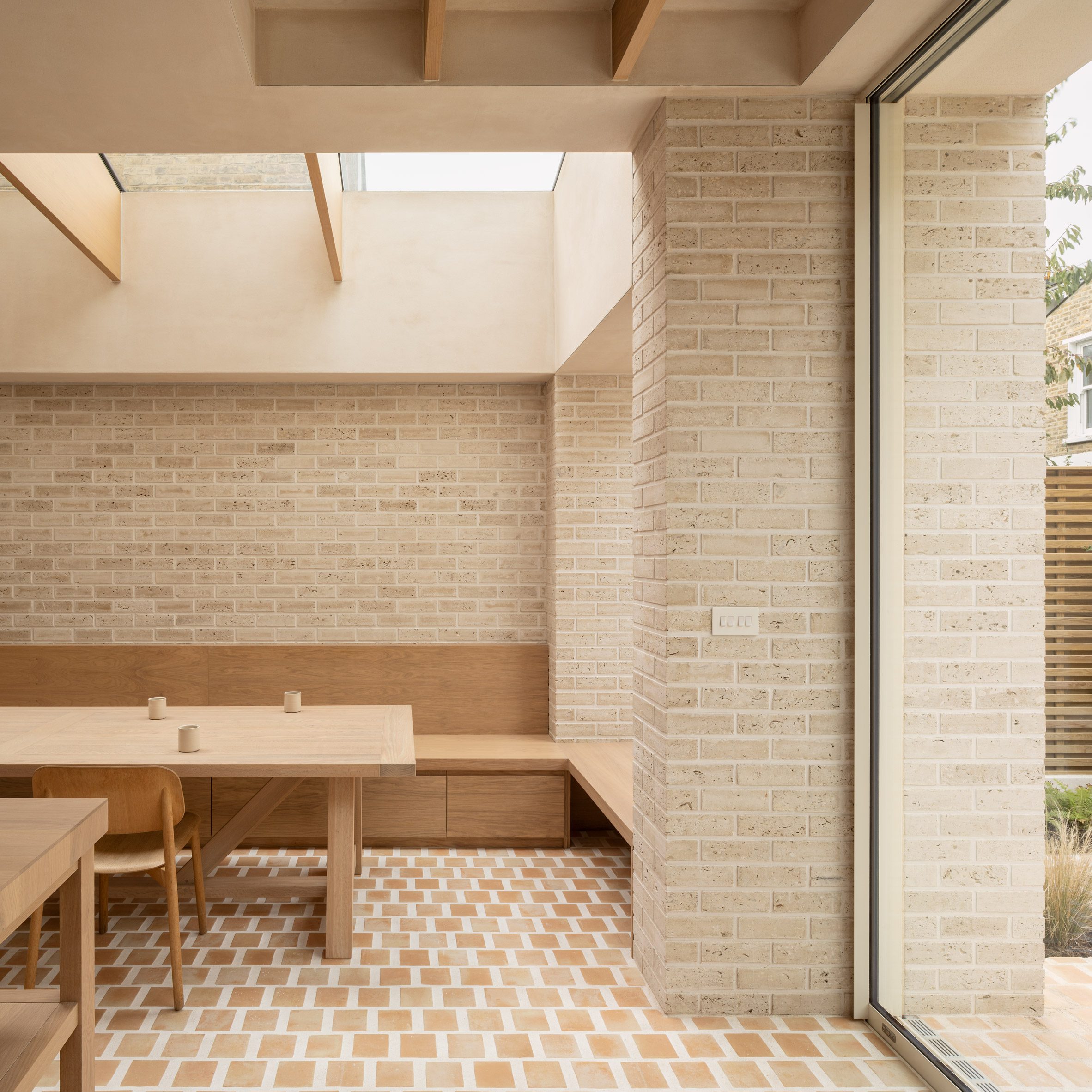
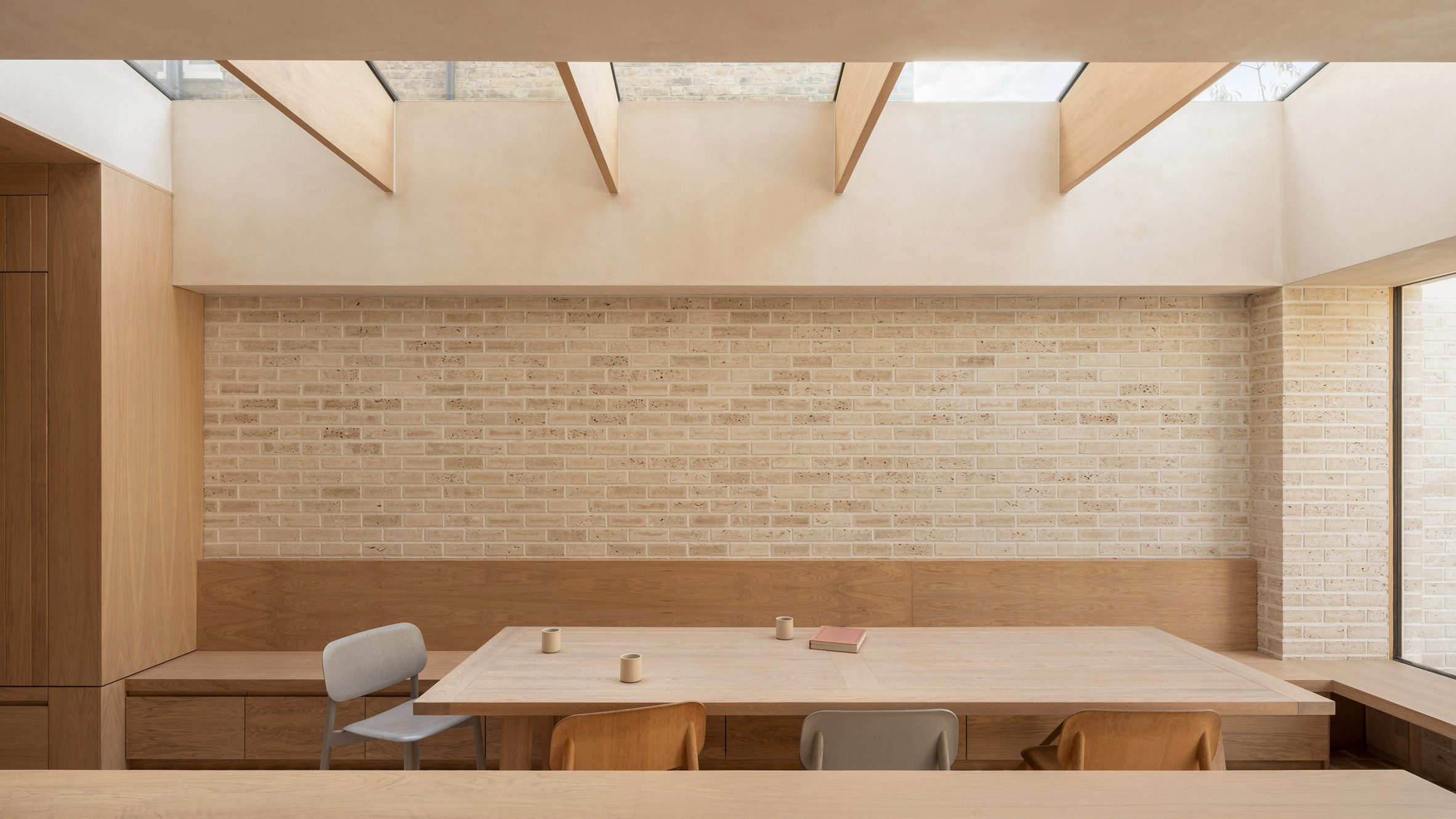
That choice matters because the project is not trying to dissolve the rear wall into pure glass. Instead, the extension feels thick and sheltering. The studio cites Jørn Utzon's Can Lis as a precedent, and you can see that influence in the deep openings, the pale clay-plaster surfaces, and the way light lands across the brick rather than bouncing off harder, shinier finishes. Proctor & Shaw also notes that the limestone brick provides thermal mass and carries about 93 per cent less embodied carbon than fired clay brick, so the material logic is practical as well as atmospheric.
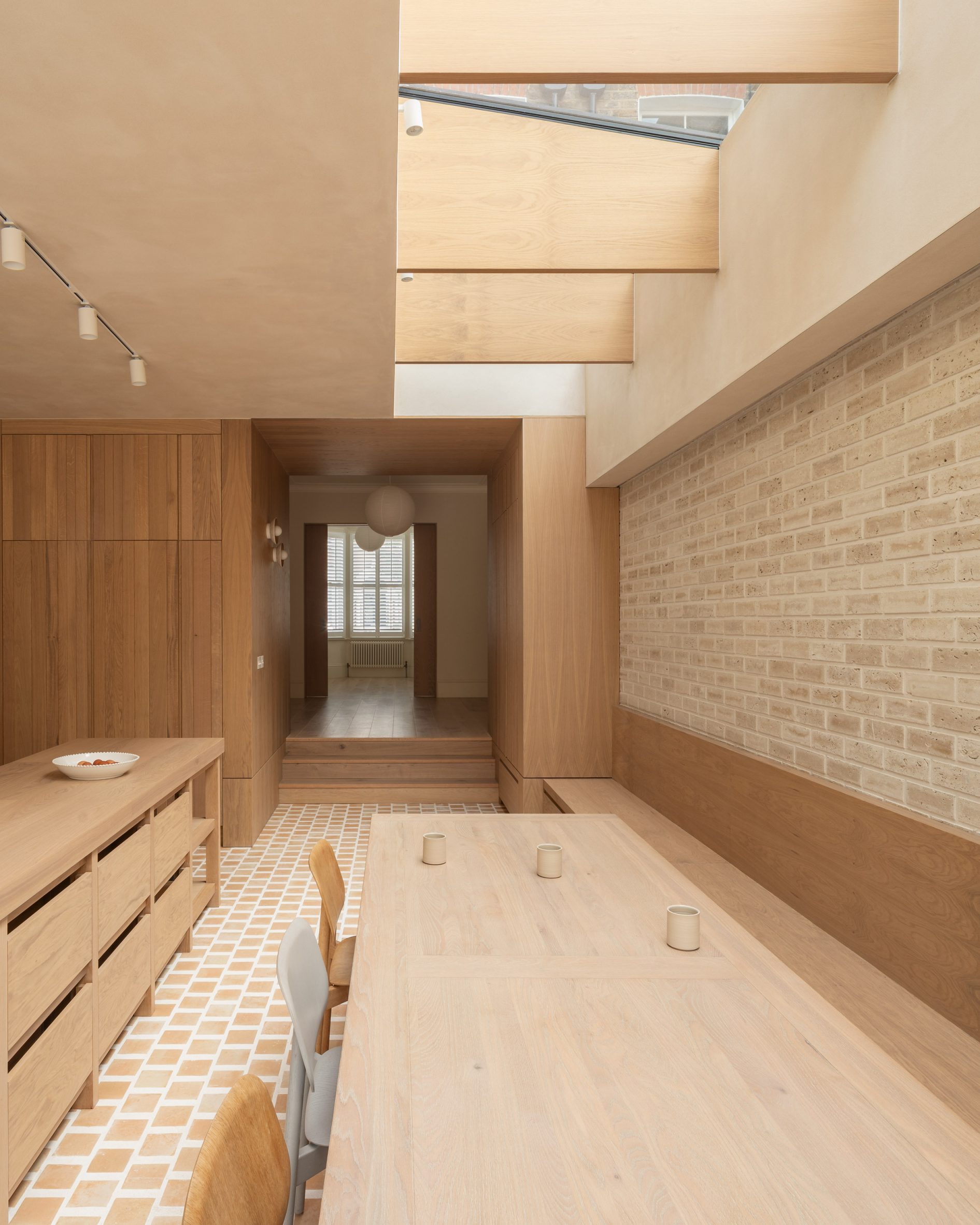
The best move was lowering the floor. By sinking the extension, the architects made room for a 2.9-metre ceiling, and that extra height is used carefully rather than theatrically. Long rooflights sit between thin oak beams above the dining area, while a full-height sliding door and a fixed garden window bring light in from the side and rear. The terracotta floor extends to the patio outside, which helps the room feel grounded rather than simply enlarged.
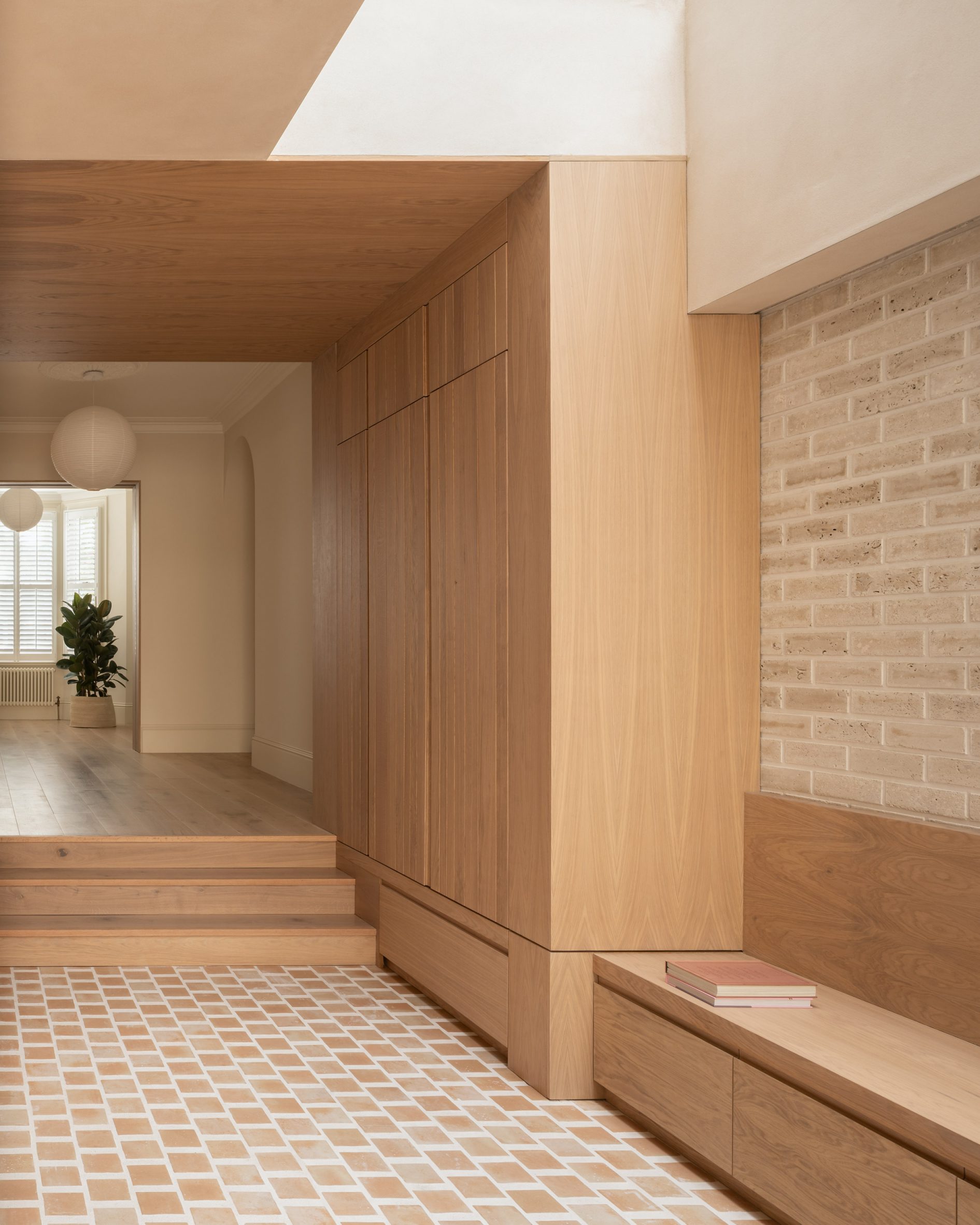
Oak joinery does most of the spatial work. A tall bank of storage and pantry cabinets wraps the step down into the new room, then turns into kitchen cabinetry, island shelving, and the long built-in bench beside the dining table. That bench continues to a window seat looking onto a planted bed, which is a small but effective way of making the garden part of daily use rather than just the view beyond the glass.
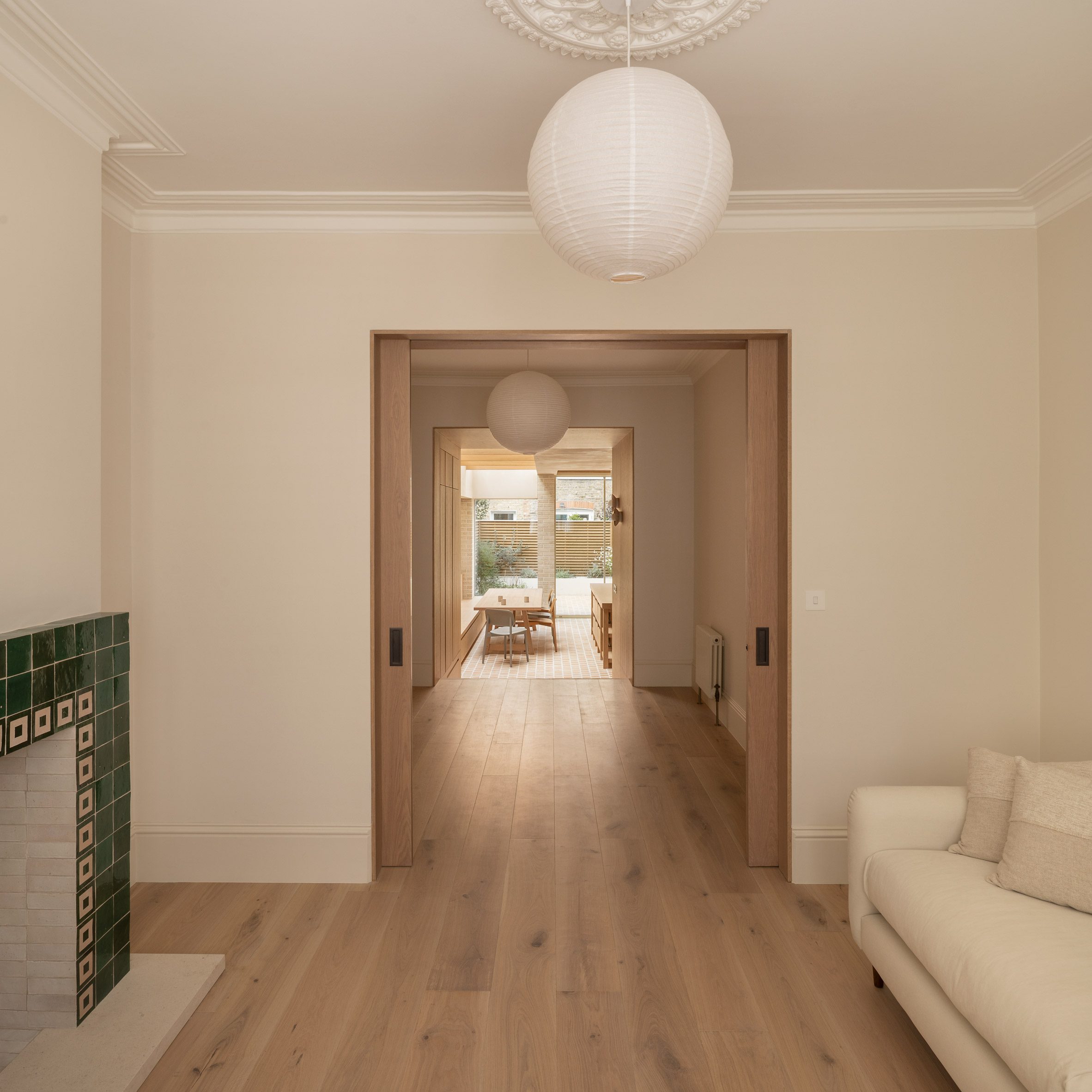
What keeps the project from feeling over-composed is the contrast with the older front rooms. There, wide oak sliding doors open the existing hallway and sitting room into a longer sequence, but the original proportions, cornices, and fireplace still register clearly. The extension is quieter in color yet more assertive in section, so old house and new room remain distinct enough to sharpen each other.
Tags: Clapham, London, UK, Townhouse, Renovation, Proctor and Shaw