architecture by: Also Office
interior furnishings by: Colony
contractor: Black Square Builders
MEP engineer: Kam Chiu Consulting Engineer
structural engineer: A Degree of Freedom
planting design: Deep Earth
photography by: David Mitchell
via: Wallpaper*, Also Office, Remodelista
Bed-Stuy, Brooklyn
Also Office's Bed-Stuy townhouse renovation is less about making an old house look new than deciding where age should remain legible. The three-story house was built in 1881 in the Bedford-Stuyvesant Historic District, and the renovation treats that history unevenly in the best sense: the garden level is remade almost completely, while the parlor level keeps its original order and much of its architectural texture.
That split is the project's strongest idea. Wallpaper describes the house and garden as a 2,625-square-foot project, while Also Office's own notes list a 3,000-square-foot townhouse-and-garden scope. Either way, the intervention is not huge by Brooklyn townhouse standards. Its impact comes from making the rear of the house work harder, especially where the ground floor, parlor terrace, and garden meet.
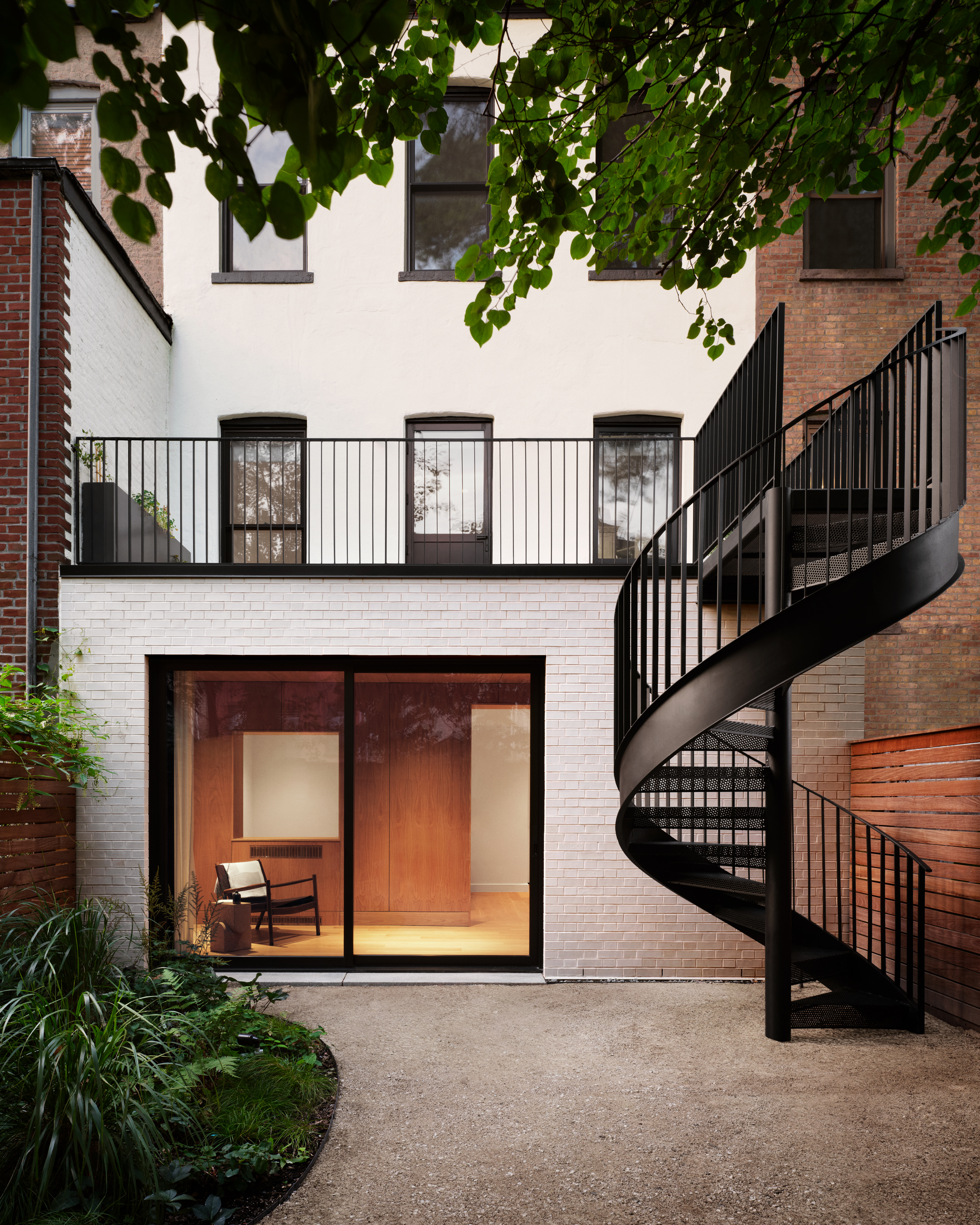
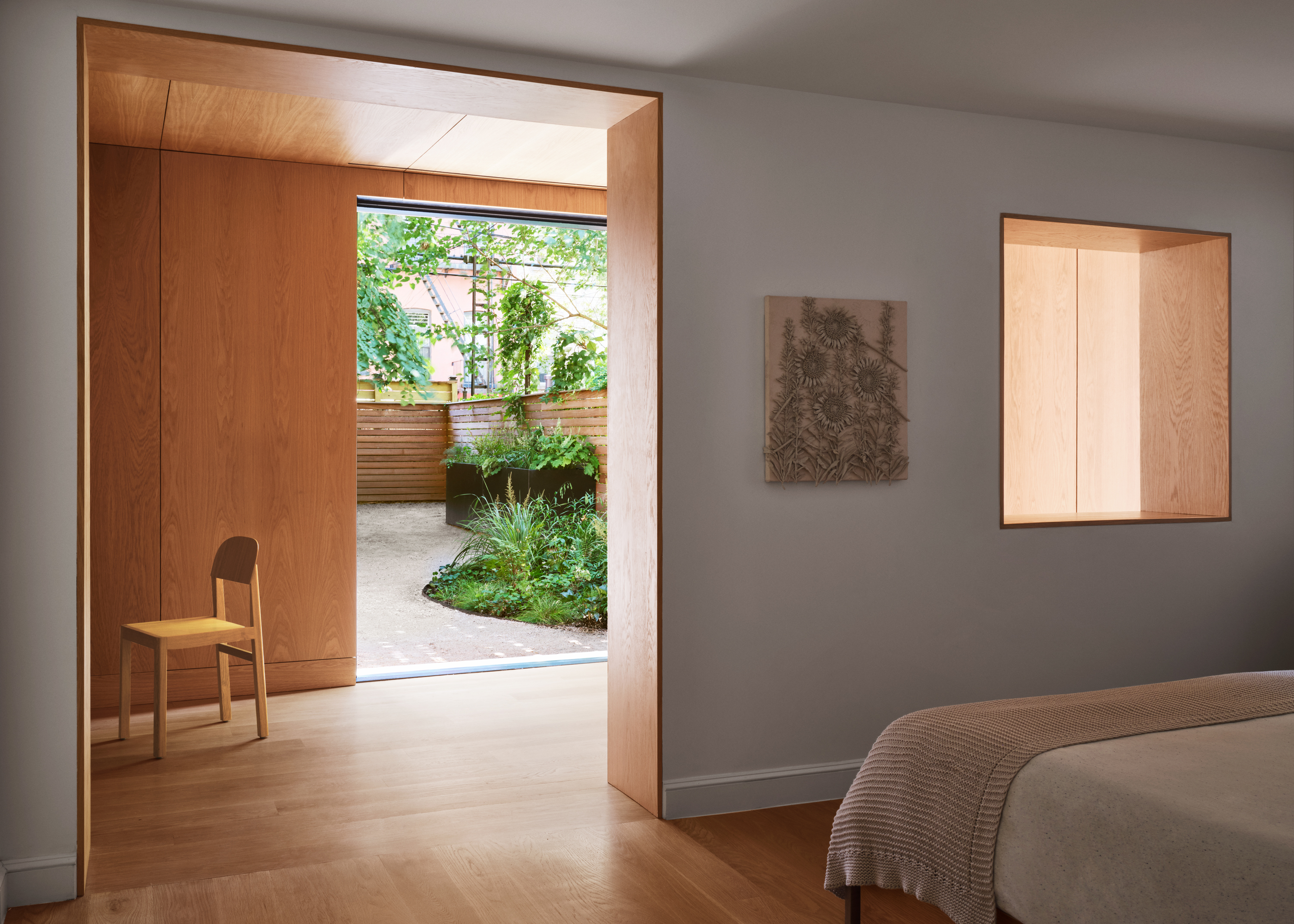
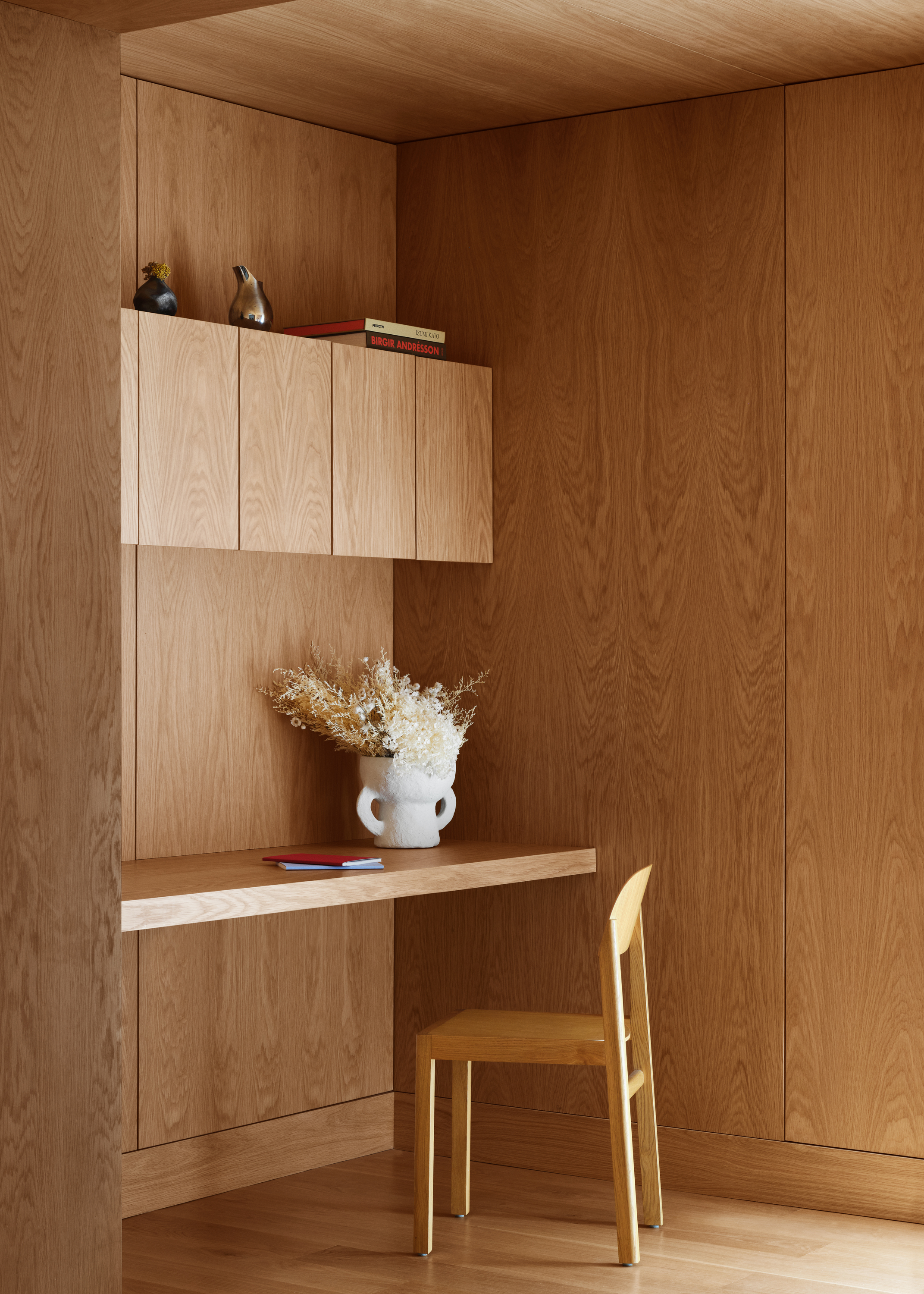
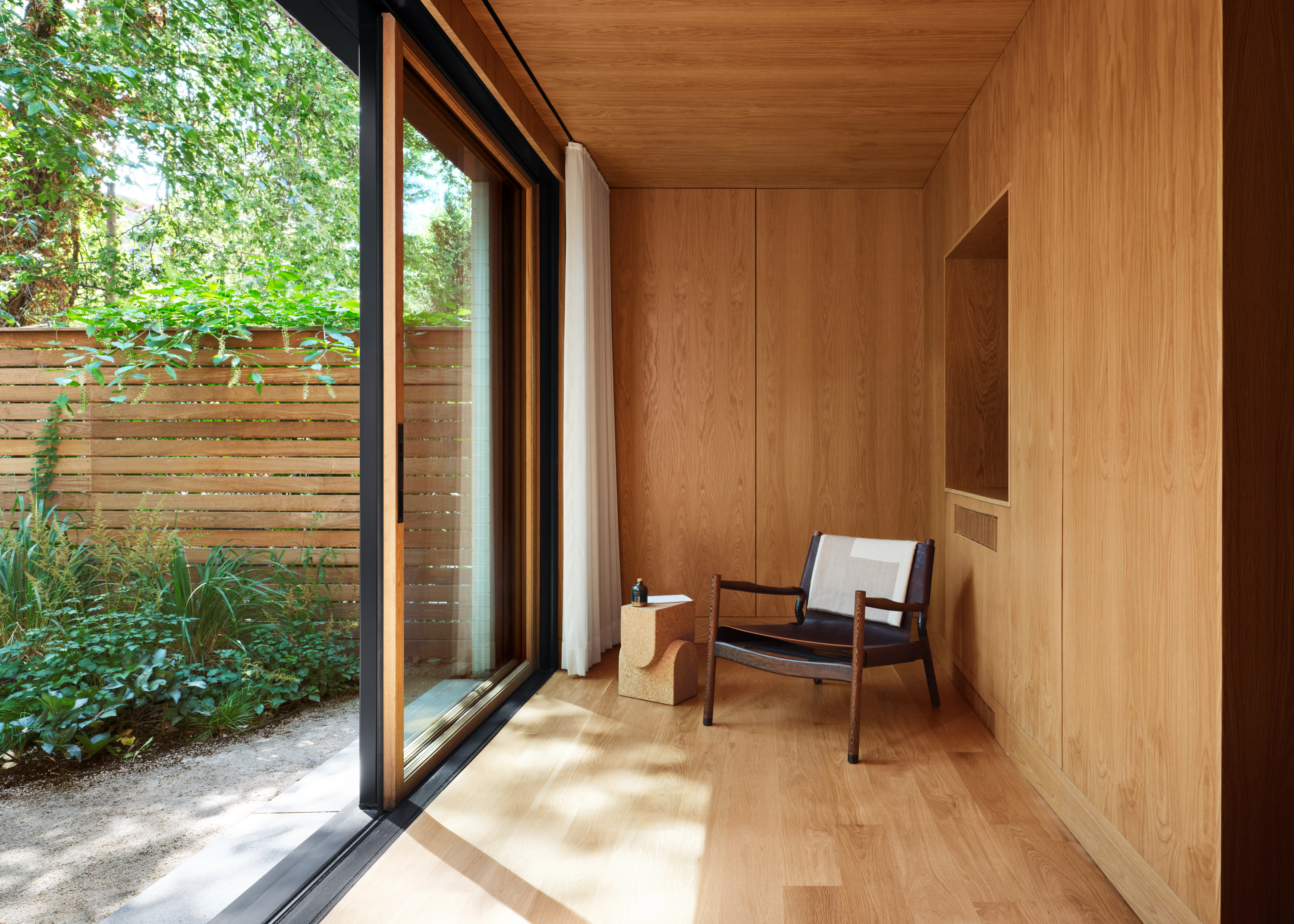
The garden level was the place for the most decisive architectural work. Also Office reorganized it with two bedrooms, two bathrooms, and a new single-story rear addition. The primary suite now faces the garden through a white oak-clad sunroom, a small threshold space that is neither simply bedroom nor porch. Oak wraps the floor, walls, ceiling, cabinetry, and sliding door, giving the room a clear identity between the more private interior and the planted yard.
That addition also changes how the floors relate to one another. Above the sunroom, a new terrace is reached from the parlor floor and from a custom circular stair in black perforated steel. The stair drops into the garden as a crisp, almost industrial counterpoint to the pale timber-lined room below and the loose planting around it. In a narrow townhouse, that is a useful move: the garden stops being only the view at the end of the plan and becomes part of the house's circulation.
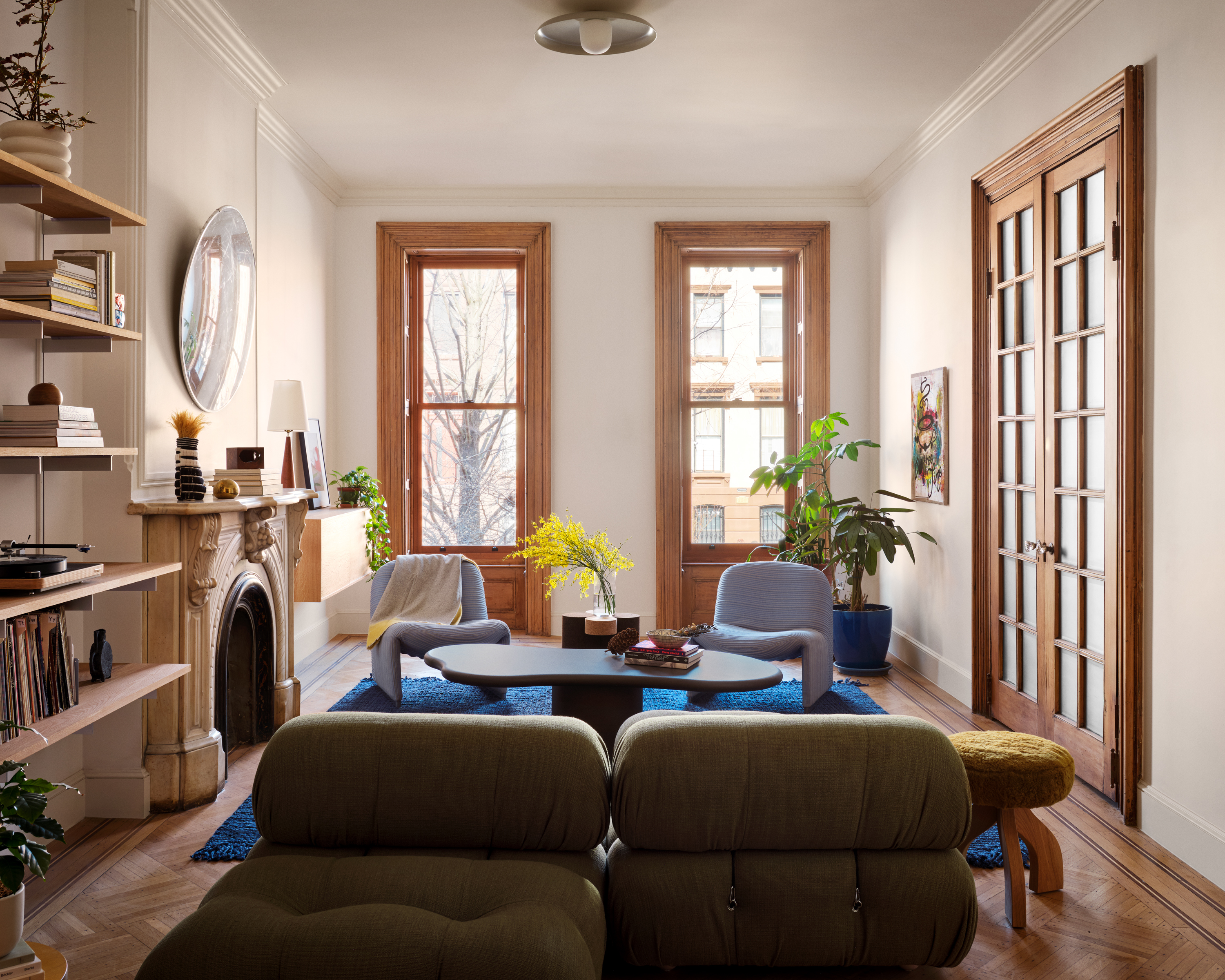
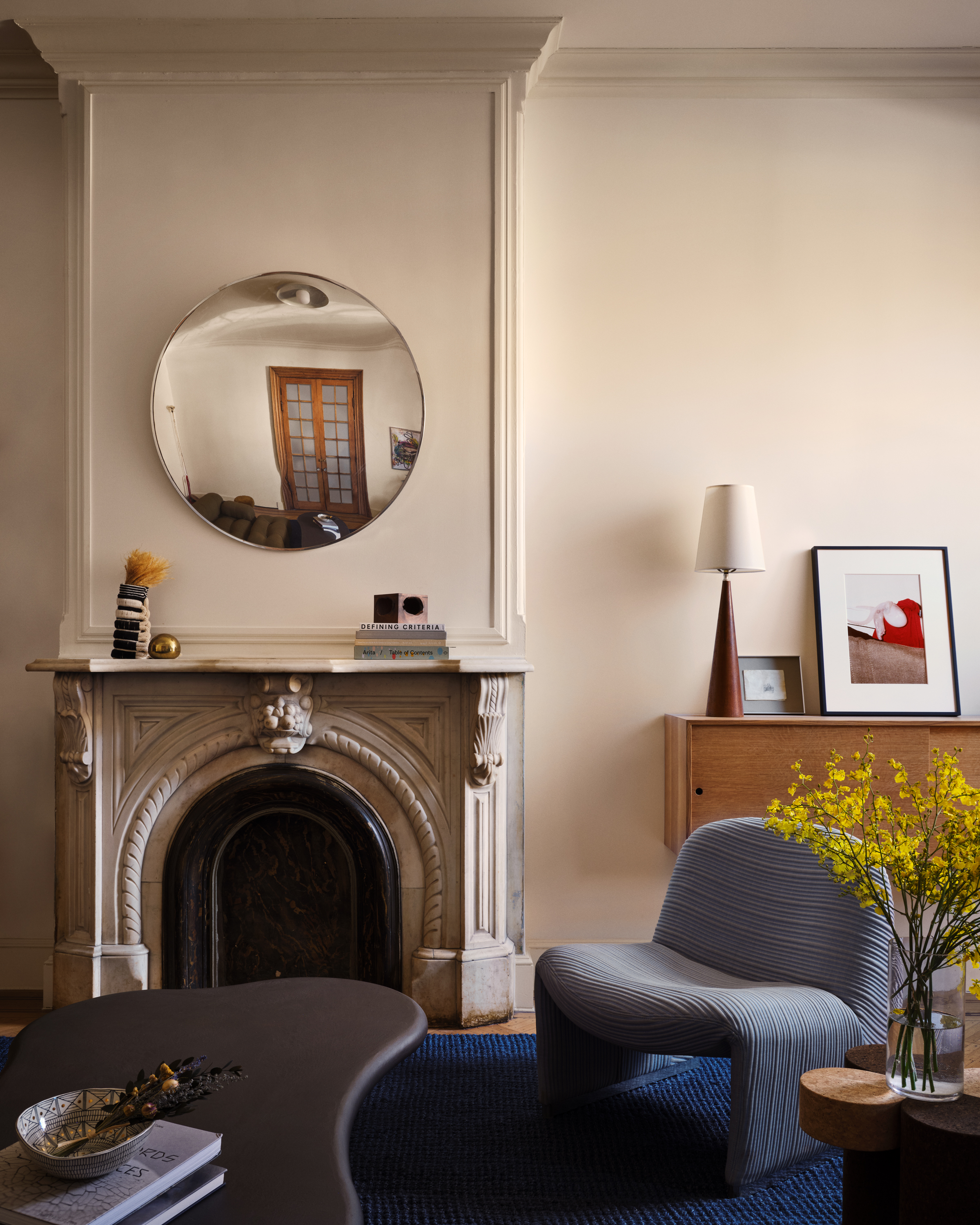
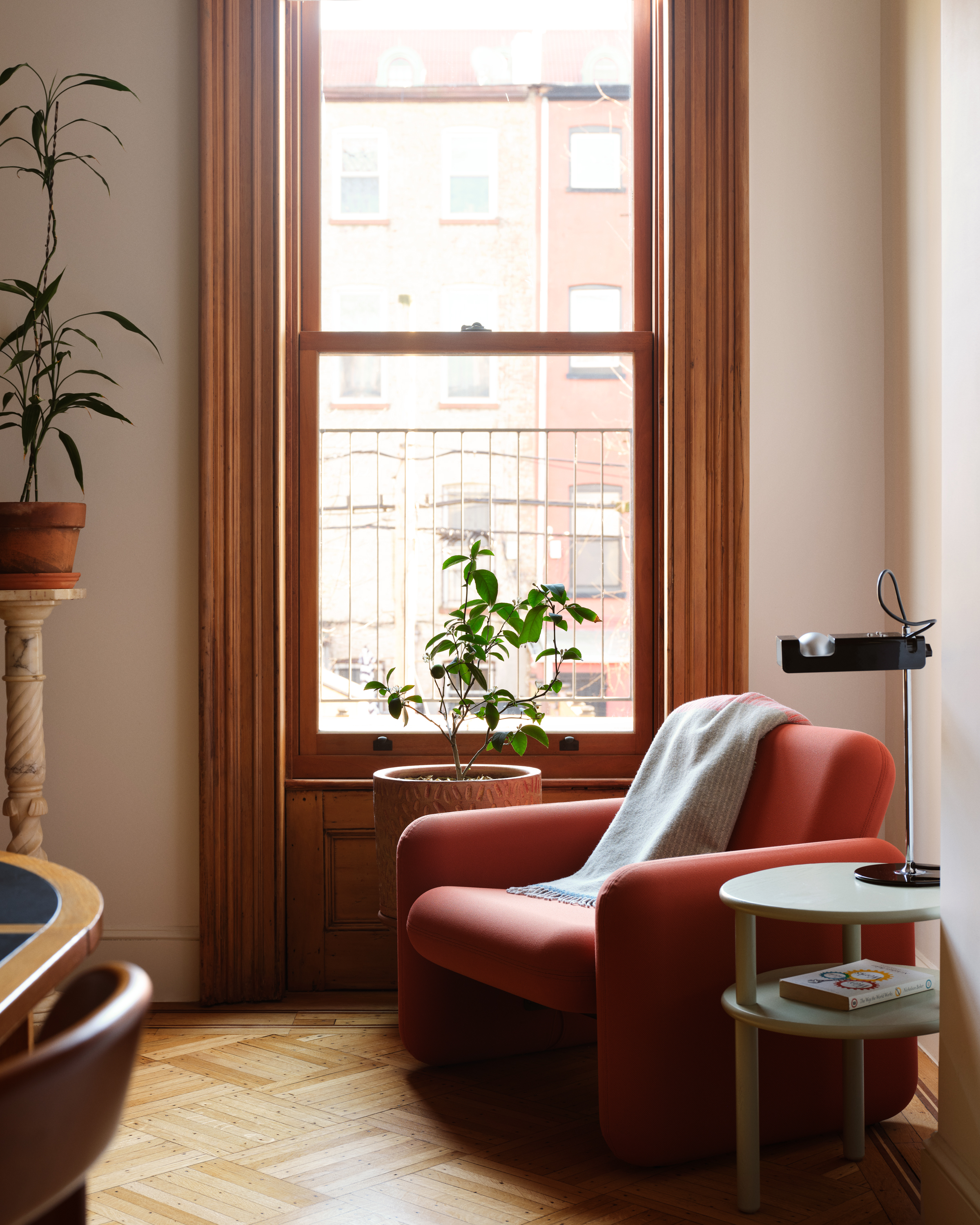
The parlor level is deliberately quieter. Also Office kept the familiar sequence of living room, dining room, and kitchen, then restored the original casework, wood trim, and pocket doors with enough restraint that cracks, tonal shifts, and wear still read as part of the room. New plaster, fresh crown moulding, and replacement details sharpen the background without flattening the old material character.
Colony's furnishing scheme works with that tension rather than covering it. On the parlor level, vintage and contemporary pieces sit against restored woodwork and white walls, including a dual-sided Camaleonda sofa that helps the living and dining rooms share one social center. Remodelista notes the use of blue vintage Alky chairs, a vintage dining table, a USM credenza, and smaller pieces by Grain and Bieke Casteleyn. The mix gives the house a collected quality, but it does not compete with the renovation's main subject: old fabric next to new precision.
The project is also practical in ways that are easy to miss in photographs. Also Office's scope included building-wide facade, mechanical, plumbing, and electrical improvements. Remodelista describes the house before work as a patchwork of previous DIY-era upgrades, with a failing, uninsulated rear extension and leaky old windows. The finished rooms feel calm because a great deal of the underlying mess was corrected first.
For owners looking at similar Brooklyn houses, the lesson is not that every historic level should be preserved untouched or every garden level should be gutted. It is that each floor may need a different answer. Here, the upper rooms keep the old compartmented logic where it still has value, while the garden level becomes more open, direct, and contemporary. The result is a house where restoration and new construction do not merge into one neutral style. They remain distinct enough to make each other clearer.
Tags: Brooklyn, Bed-Stuy, New York, NYC, Townhouse, Renovation, Also Office, Colony