Architecture by O’Sullivan Skoufoglou
Photographer: Rory Gardiner
via: EST
London, UK
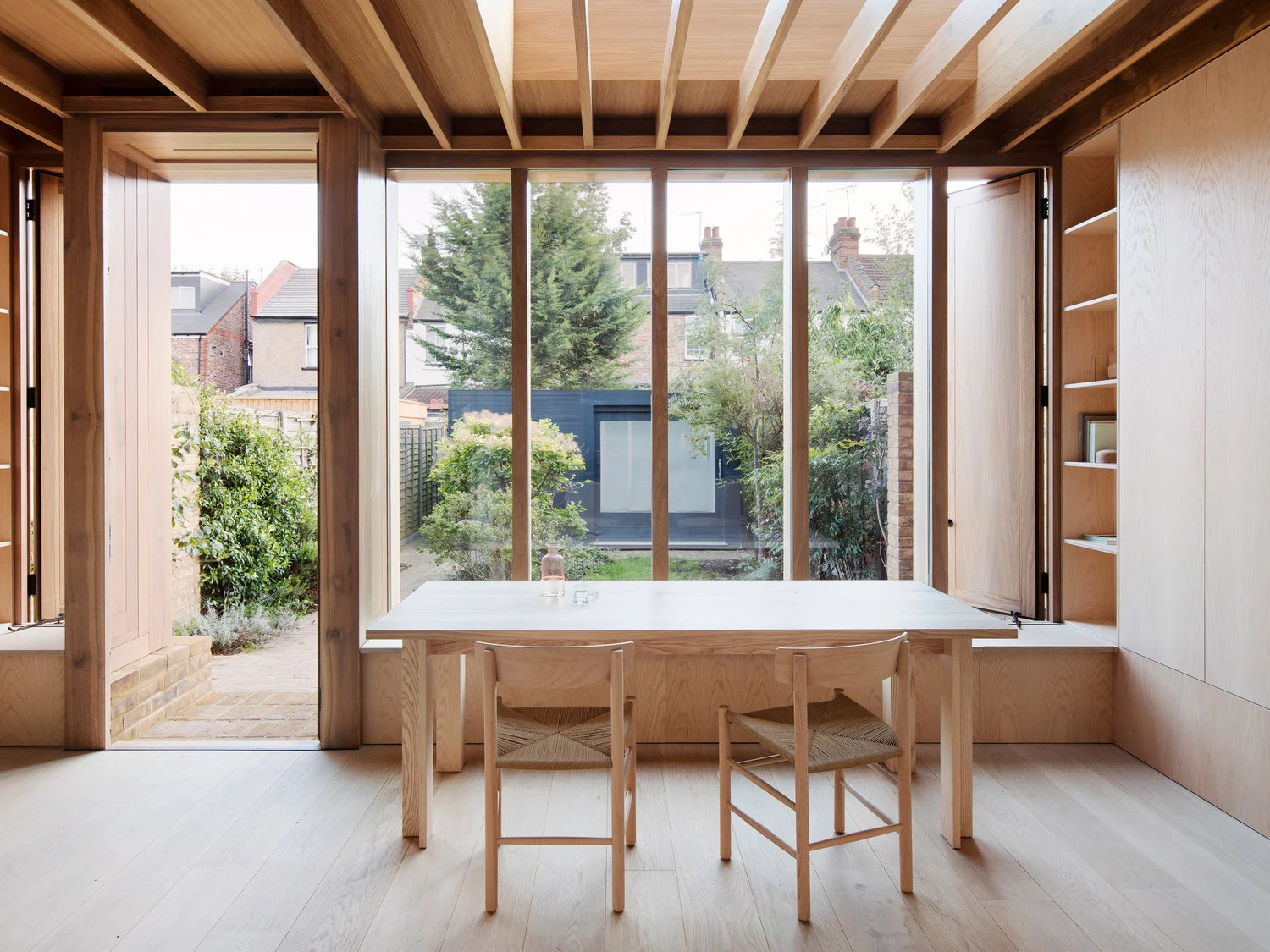
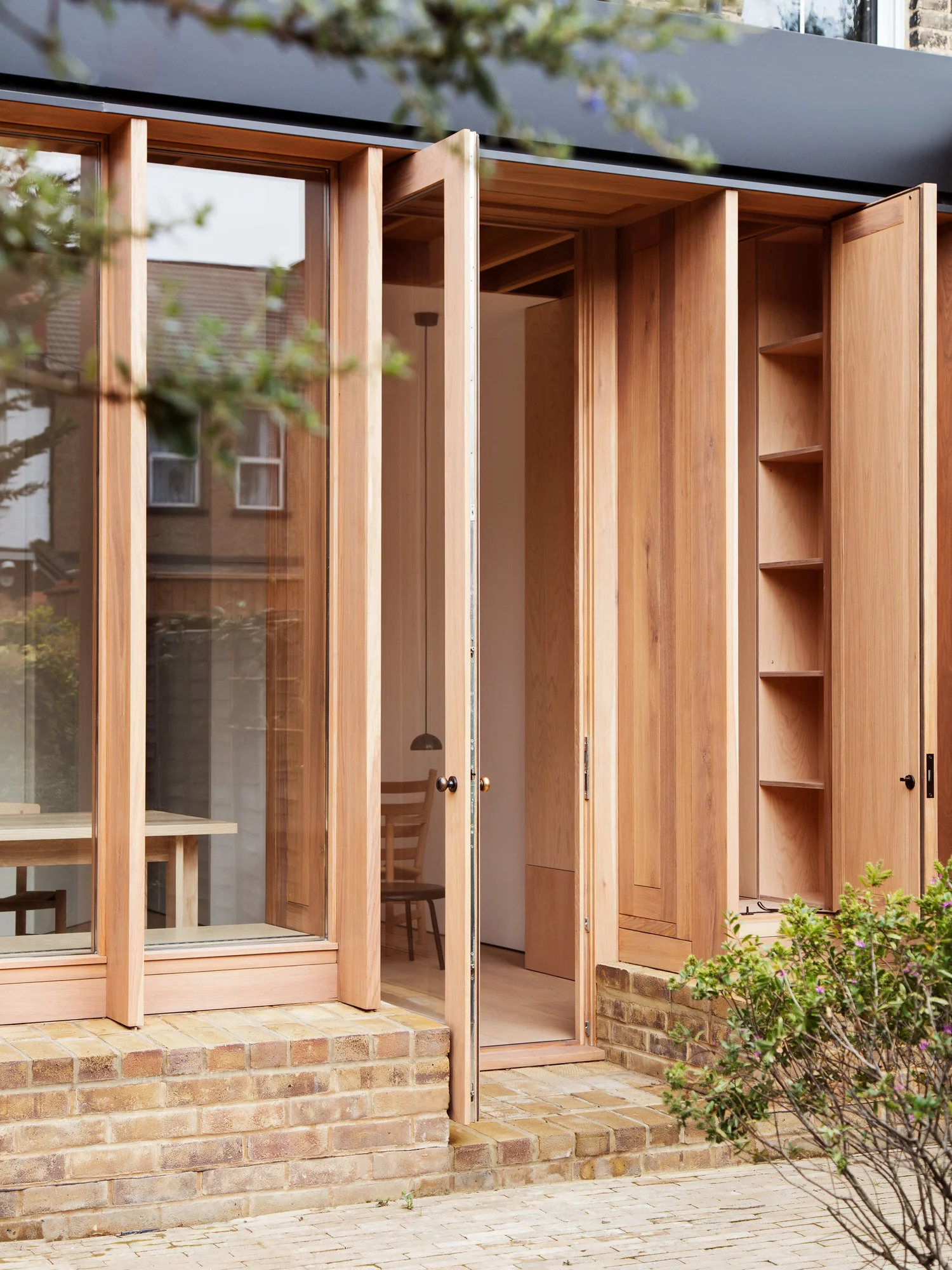
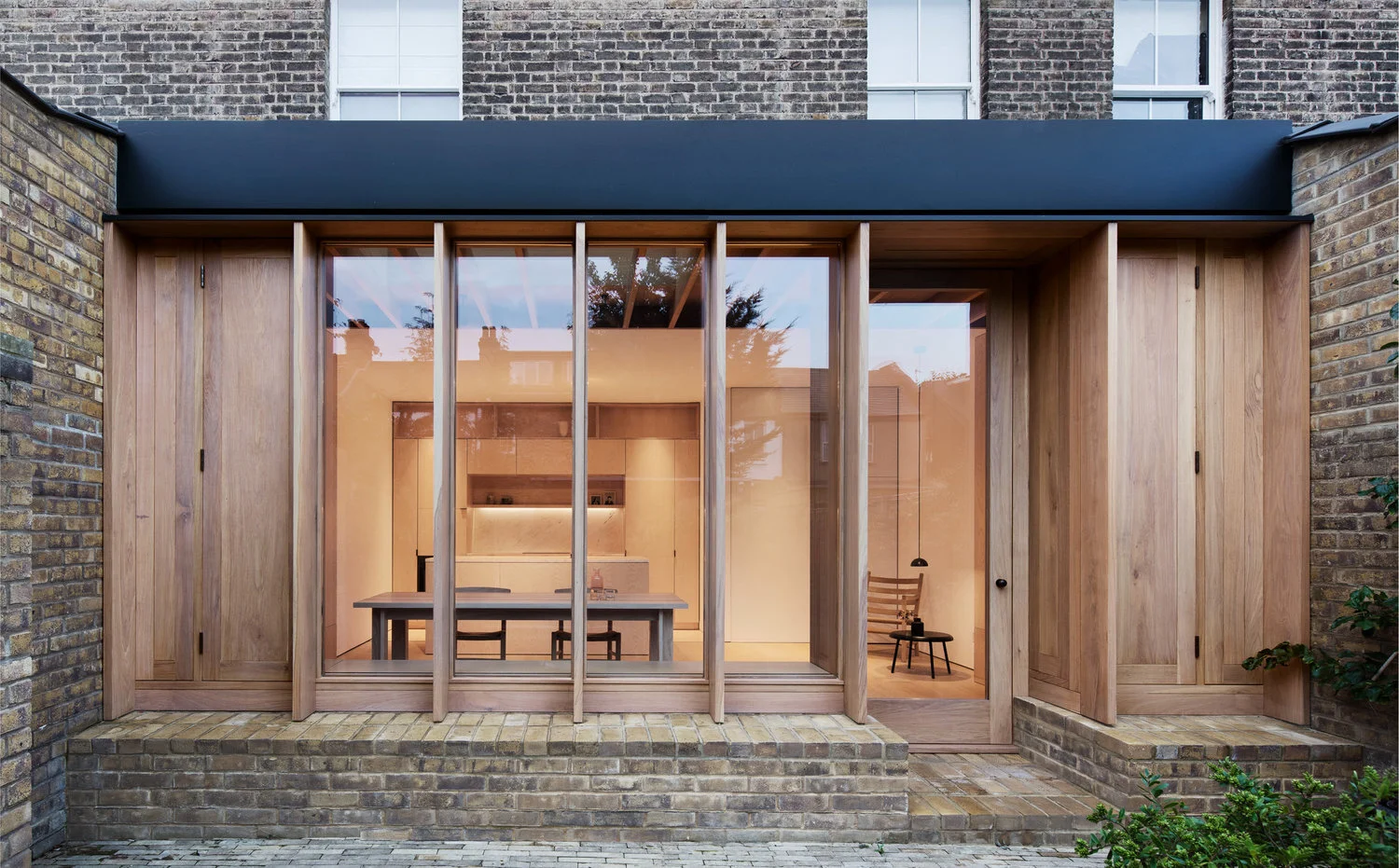
Dewsbury Road is distinctive because the extension does not imitate the original house or break from it entirely; it establishes a clear dialogue between old and new. O’Sullivan Skoufoglou replaced a poor-quality 1970s rear addition with a tighter intervention in Dollis Hill, North West London. The new work is legible immediately: a brick plinth and an expressed oak frame with vertical timber fins that operate as structure, screening, and facade rhythm at once.
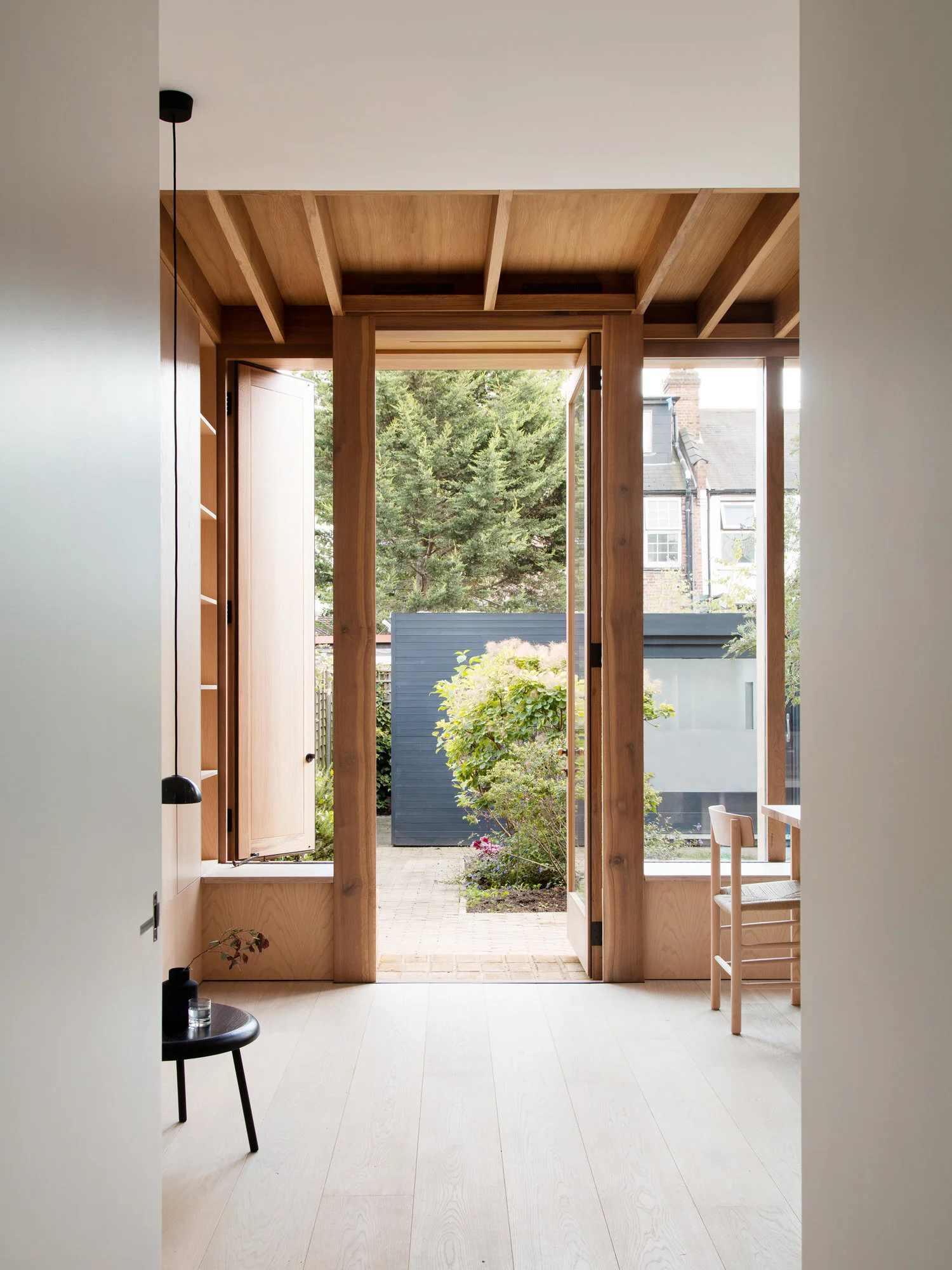
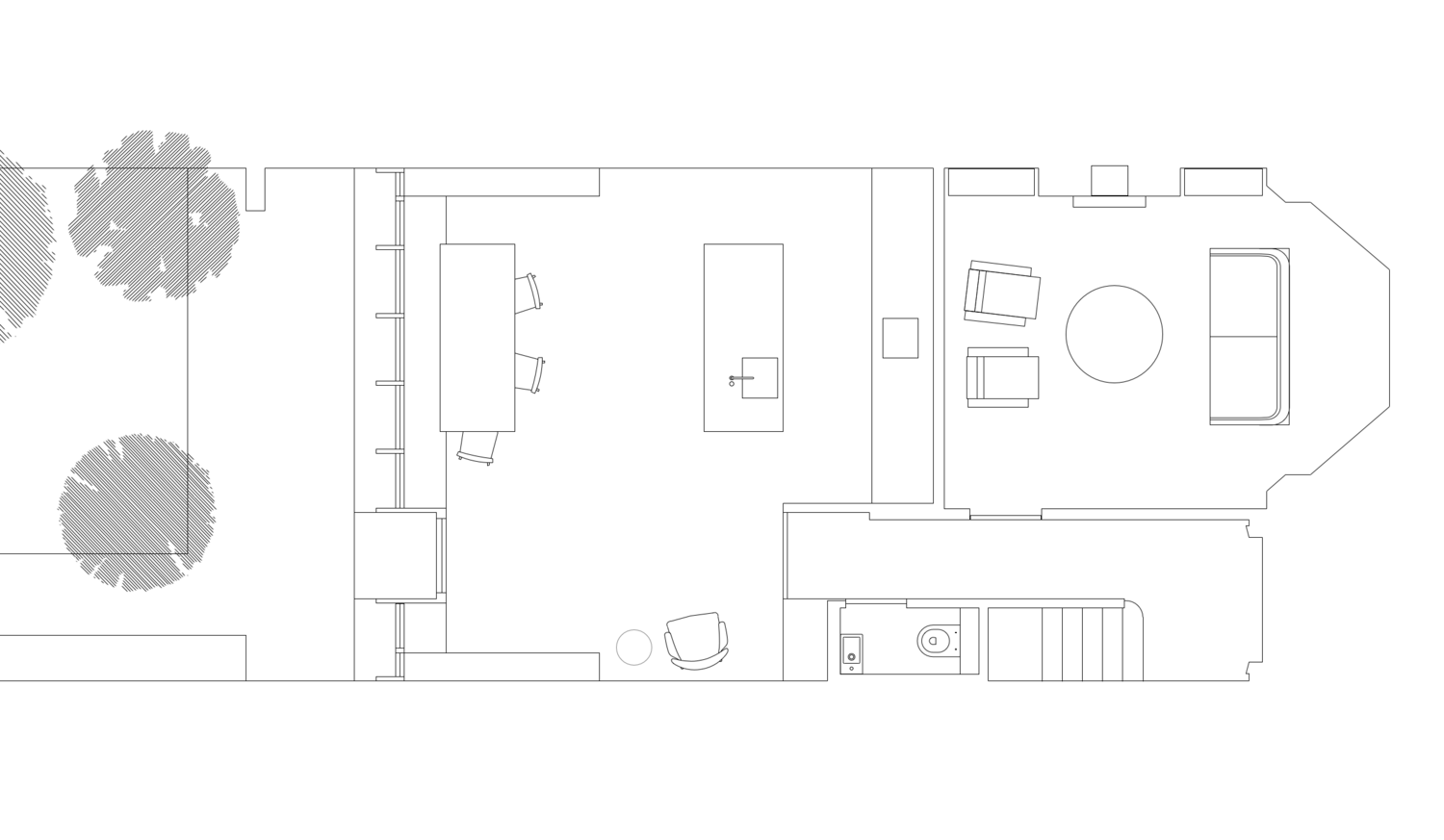
At ground level, the project is especially precise. The long bench integrated into the elevation is not loose furniture but part of the architecture itself, extending the language of the frame into daily use. Openings are cut with real depth, and the threshold sequence feels measured rather than casual, so movement between garden edge and interior reads as a continuous architectural event instead of a simple back-door condition.
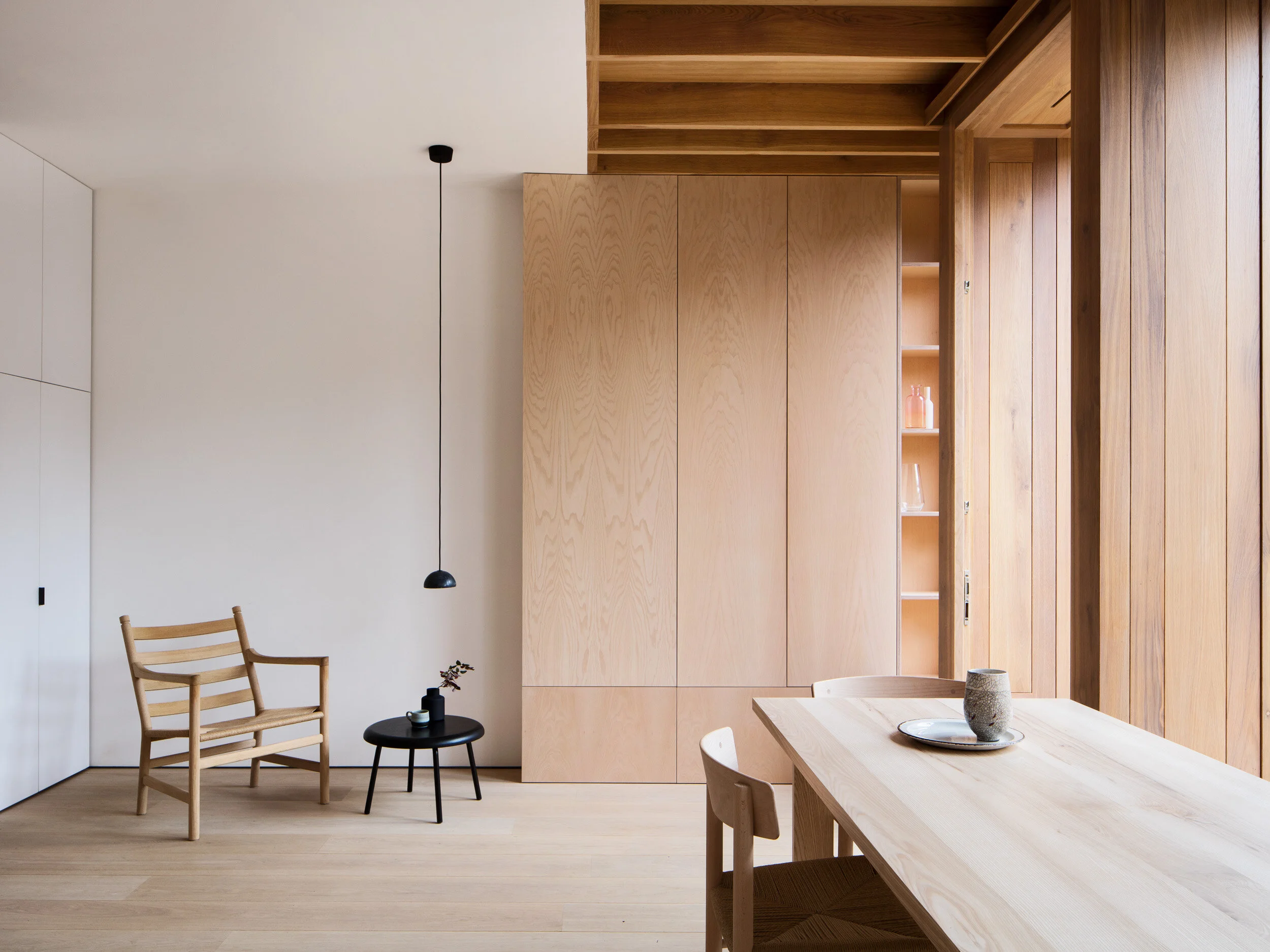
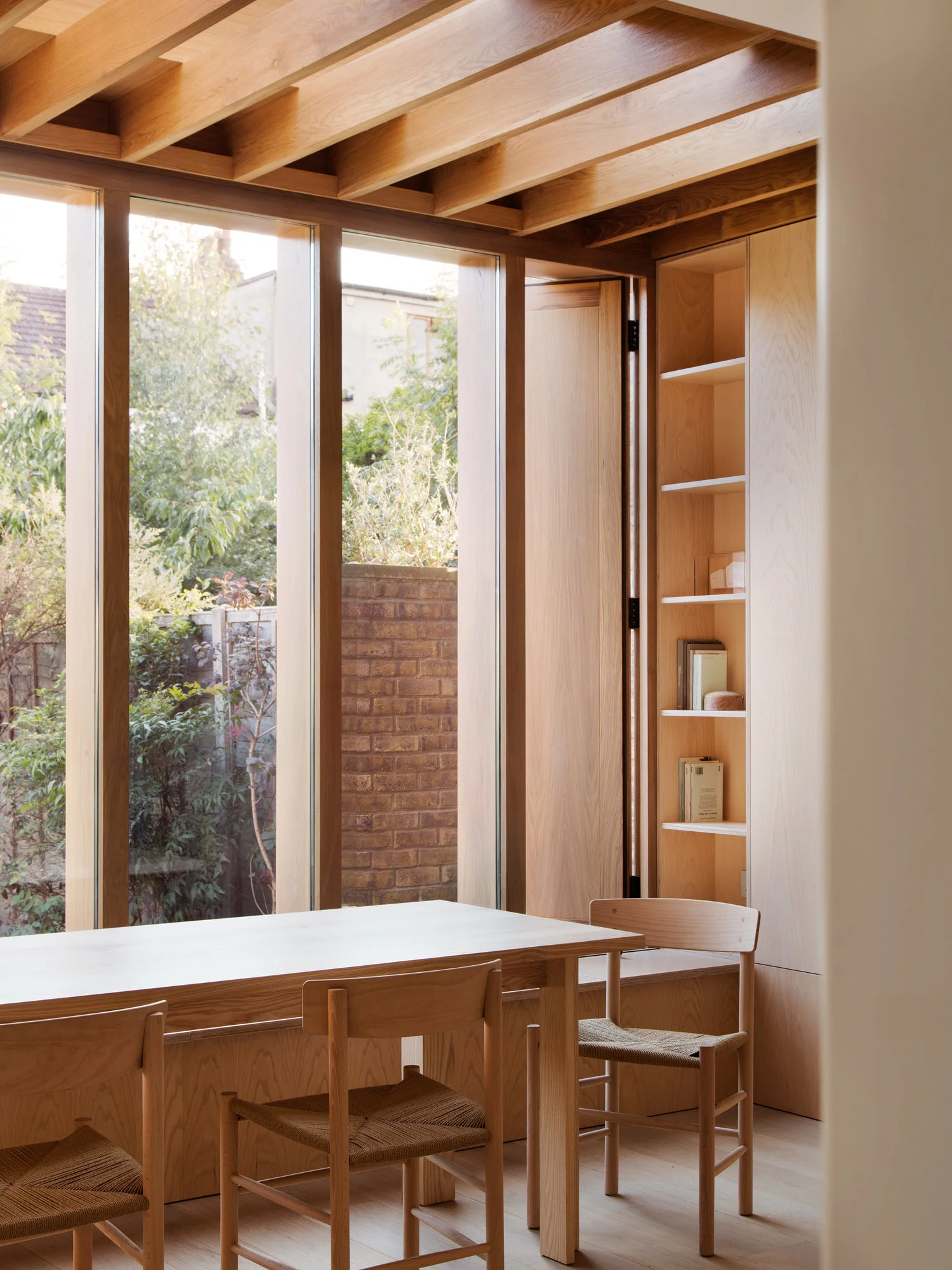
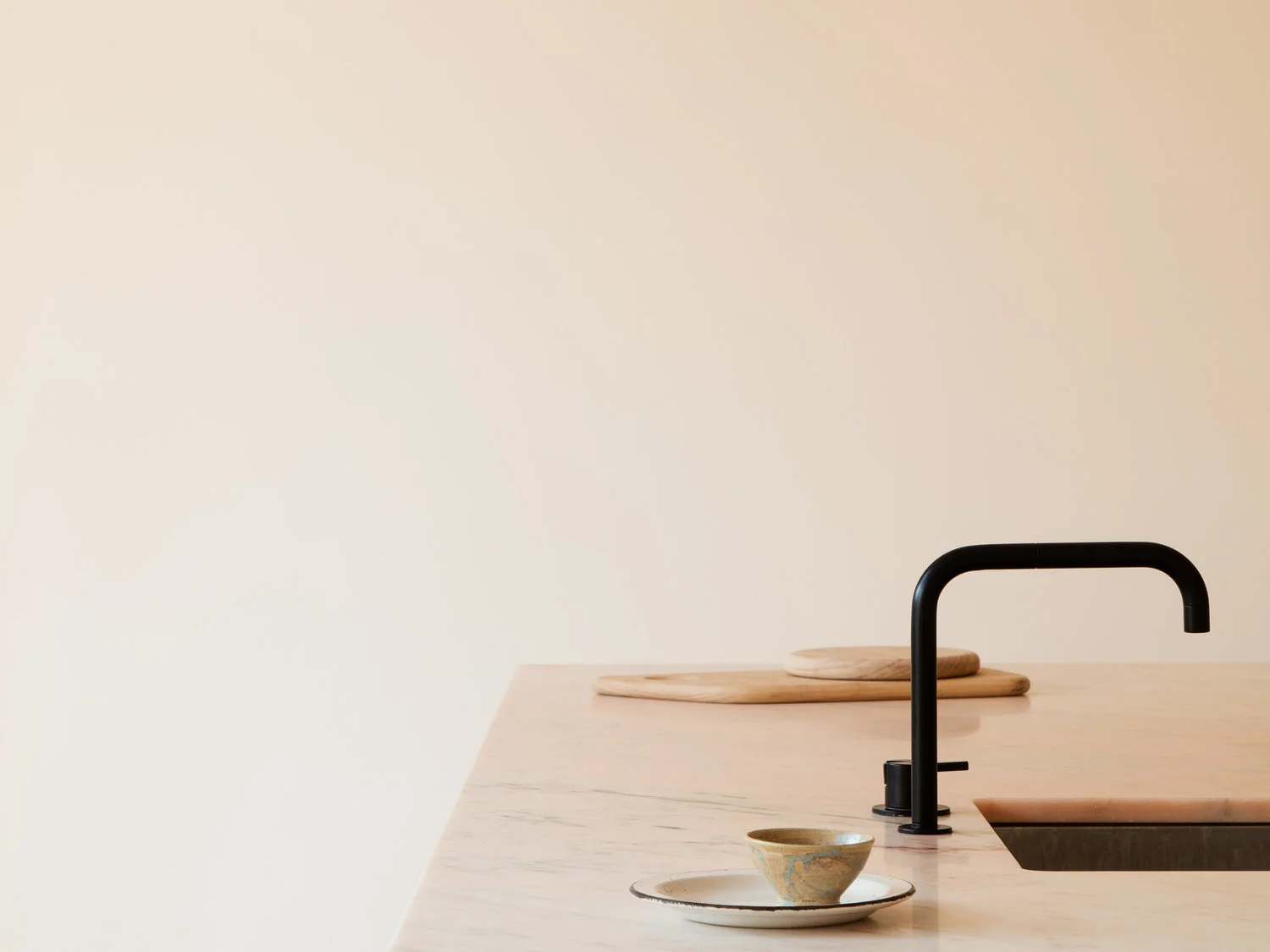
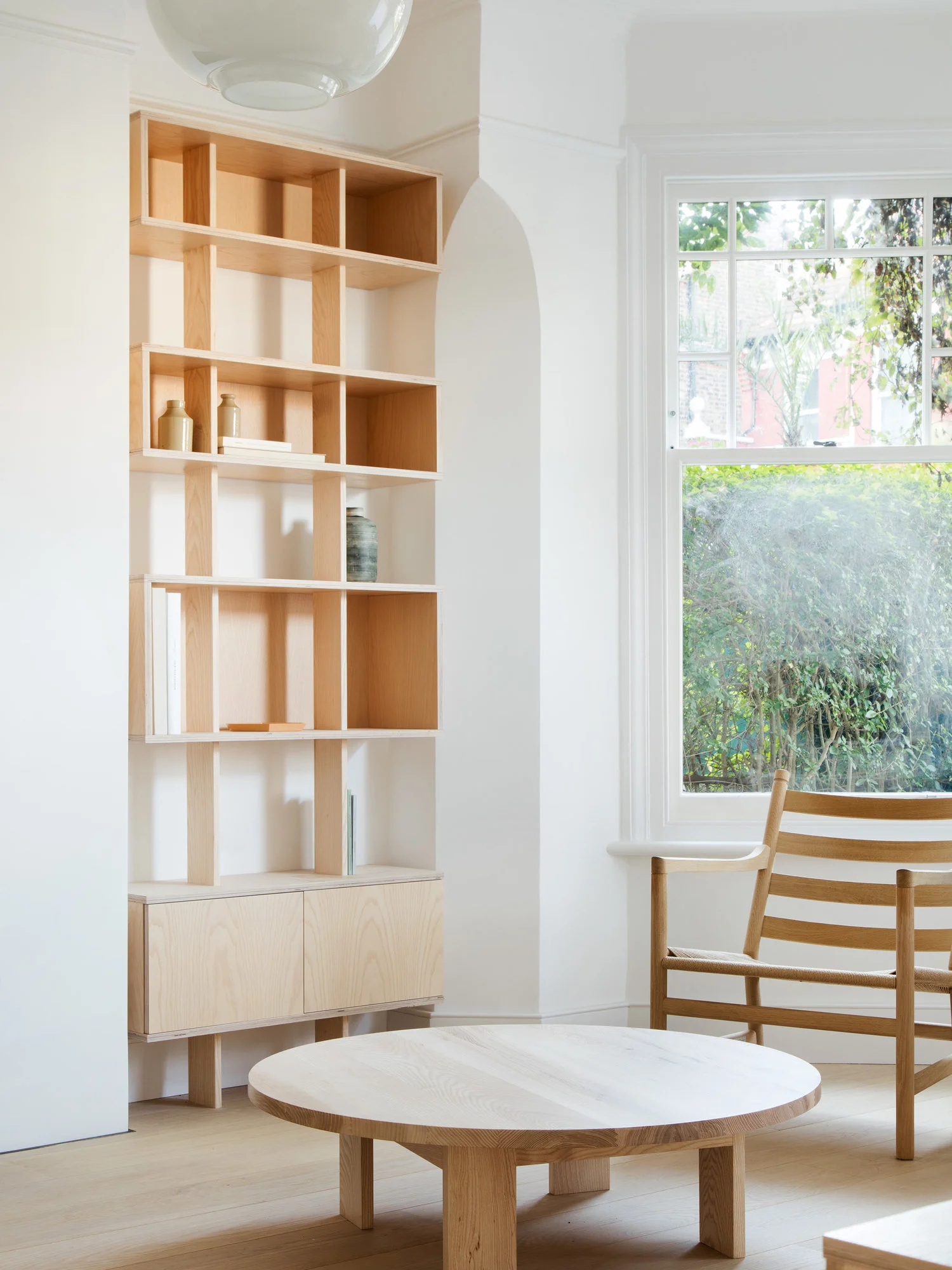
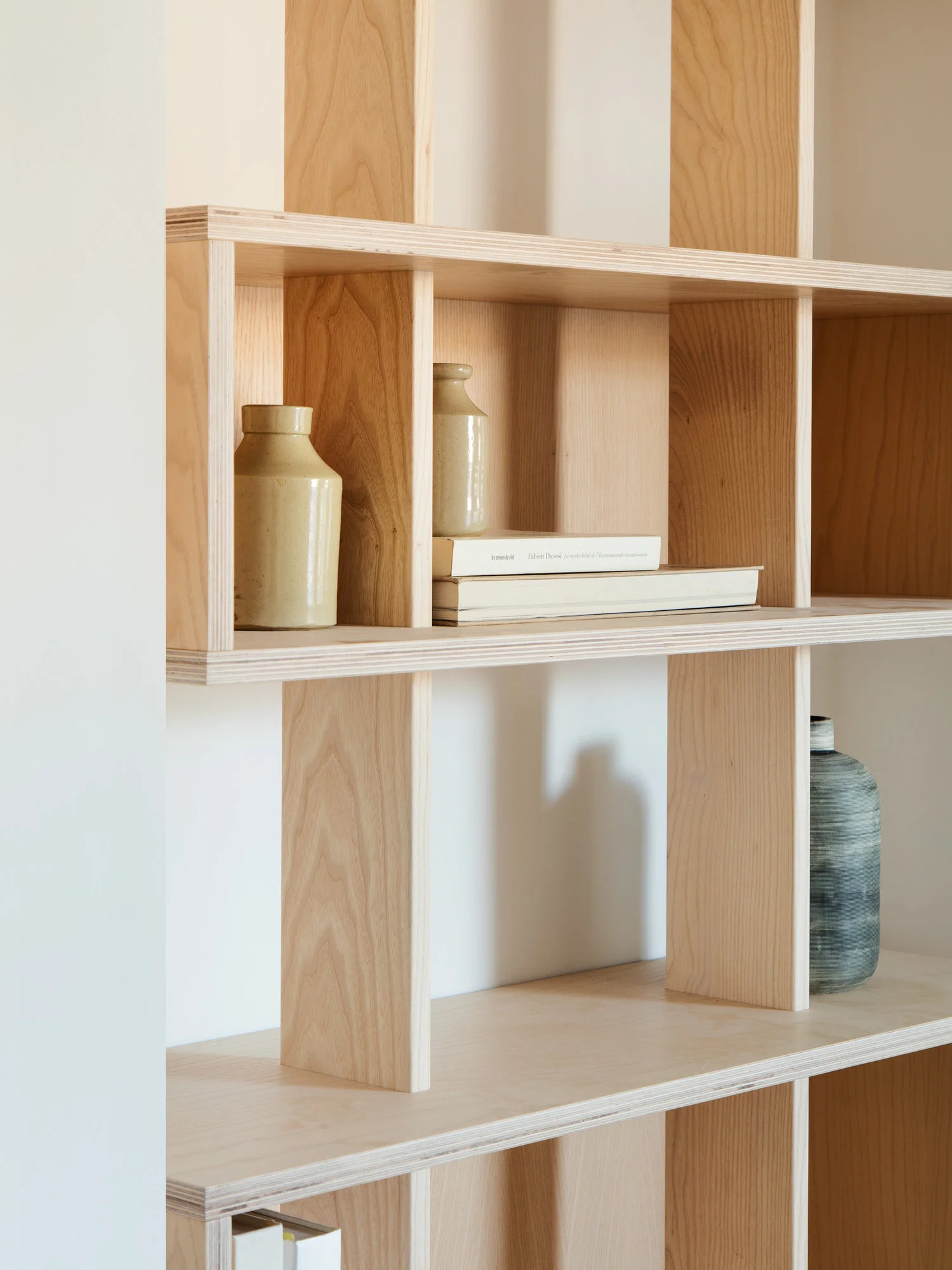
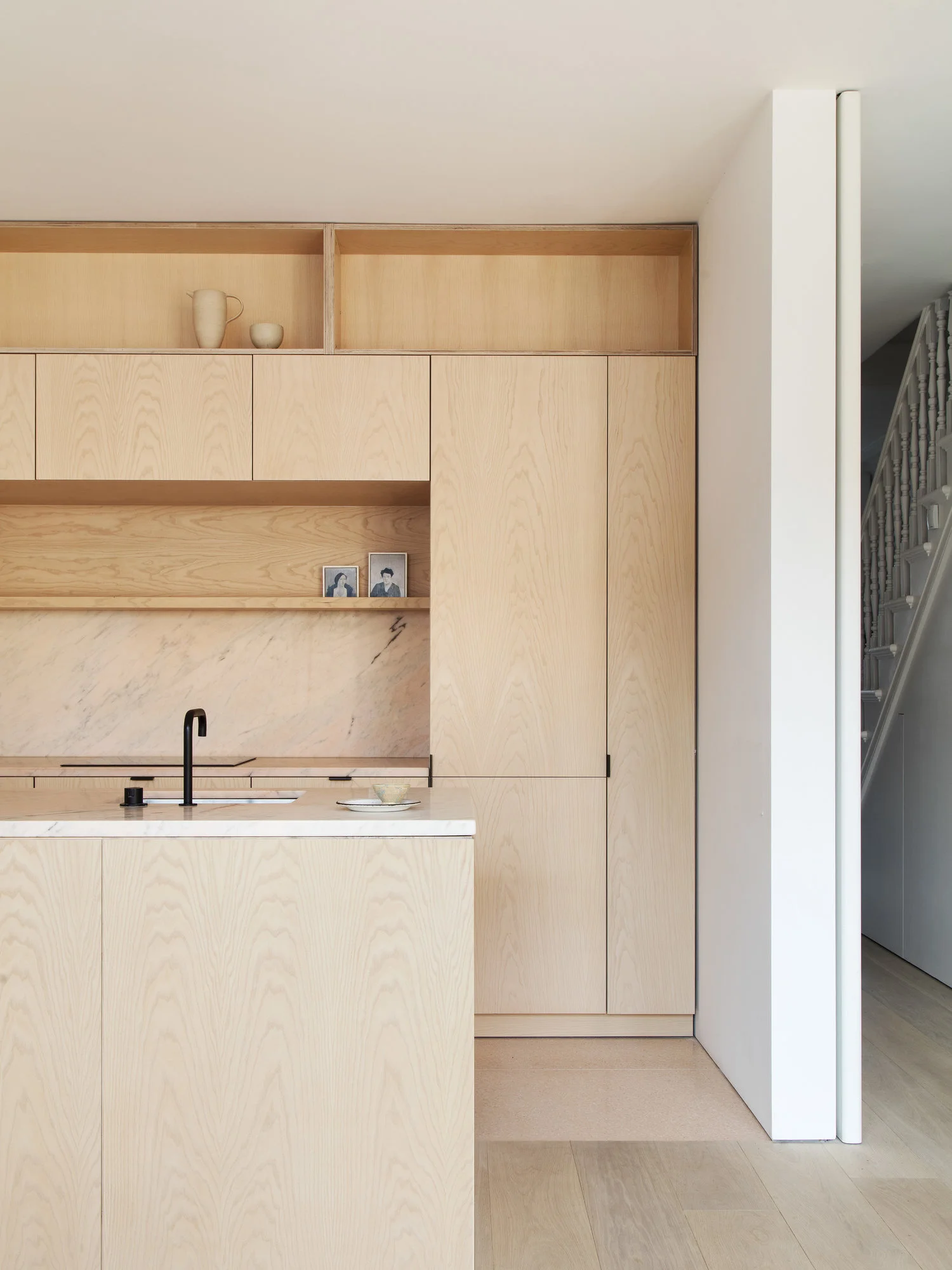
Materially, the scheme is restrained but specific: honey-brown oak, lighter ash secondary elements, soft off-white plaster, and darker metal accents at junctions. That contrast between pale existing fabric and denser timber insertion gives the extension clarity without visual noise. Board direction, reveal depth, and joinery alignment carry much of the character, allowing the rooms to feel calm while still highly detailed.
A key architectural move is privacy without heaviness. Published descriptions of the project note how views and daylight are oriented toward the side garden to reduce direct overlooking. The result is contemporary but grounded: an addition with a clear tectonic identity, robust material logic, and enough craft quality to explain why it appears repeatedly in awards coverage.
Tags: O’Sullivan Skoufoglou, London